NFT marketplace product teams need four core onchain data feeds—real-time listings, bids, executed sales, and collection-level floor/volume stats—to power modern discovery, pricing, and portfolio experiences. Instead of building custom indexers across chains and marketplaces, you can plug into infrastructure like Codex to ingest, normalize, and expose these feeds via a single high-performance API.
This guide breaks down the core NFT marketplace data surfaces, then shows how Codex-style onchain APIs let you ship fast without maintaining your own NFT indexing pipeline.
The Core On-Chain Data Primitives for NFT Marketplaces
For almost every NFT marketplace or NFT-aware product, the same four primitives drive the UI and business logic:
- Active listings / asks
- Active bids / offers
- Executed sales / trades
- Collection floor price & volume statistics
OpenSea, Blur, Magic Eden, and others all expose these surfaces in some form via their APIs and streaming endpoints. If you’re building your own marketplace, analytics surface, or social trading app, you need equivalent onchain coverage—preferably across chains and marketplaces, not just your own smart contracts.
Let’s unpack each primitive.
1. NFT Listings Feed API (Active Asks)
An NFT listings feed API answers the question: “What’s currently for sale, at what price, and under what terms?”
At minimum, you need for each listing:
- NFT identifier (contract, token ID, and collection slug)
- Ask price (in native chain asset and in USD)
- Seller wallet address
- Marketplace / protocol source
- Timestamp and expiration
- Order type (fixed price, Dutch auction, etc.)
Product teams use a listings feed to:
- Populate collection pages and search results
- Highlight best listing per NFT (lowest ask, most recent, or most liquid)
- Display real-time marketplace order books onchain (e.g., all current asks for a collection)
Codex-style capability:
- Ingest raw marketplace events (e.g.,
OrderCreated,ListingAdded) across chains - Normalize them into canonical "listing" objects tied to tokens and collections
- Enrich with pricing data (USD equivalent, native-to-USD conversion via trading-grade price feeds)
Because Codex already indexes 80+ networks and 70M+ tokens, the same data infrastructure that powers token order books can be extended to NFTs’ listing views.
2. Real-Time NFT Listings WebSocket (Streaming New Asks)
A real-time NFT listings WebSocket or subscription stream answers: “What just hit the market right now?”
Polling is too slow and too expensive for serious marketplaces. High-traffic interfaces now rely on:
- WebSockets for streaming events
- GraphQL subscriptions for fine-grained filters (by collection, wallet, marketplace)
- Webhooks for server-side reactions (e.g., alerting, re-ranking, or triggering bots)
Codex’s architectural model is built around this:
- One GraphQL-style endpoint
- Query, subscription, and webhook modes
- Sub-second latencies, optimized specifically for trading- and listing-adjacent UX
For NFTs, this lets you:
- Subscribe to new listings in a collection
- Watch listings from a specific wallet (e.g., whales or curated sellers)
- Stream events into a recommendation engine or activity feed
Instead of standing up your own event decoders and WebSocket gateways per chain, you hook into Codex’s subscriptions and focus on your ranking logic and UI.
3. On-Chain NFT Bids Feed (Active Offers)
An onchain NFT bids feed answers: “Who wants to buy this NFT, at what price, and how does that compare to the asks?”
For bids/offers, you’ll typically need:
- NFT identifier and collection
- Bid price (native asset + USD)
- Bidder wallet address
- Marketplace or protocol source
- Expiry and any special conditions (e.g., trait-specific bids, collection-wide bids)
This feed powers:
- Best-offer panels on listing pages
- Automated acceptance logic (e.g., instant sale if bid > threshold)
- Liquidity heatmaps per collection or trait
OpenSea’s best-offer endpoints show exactly how product teams think: they want the current best bid per NFT, plus history for analytics.
Codex’s generalized “order/trade” schema makes it straightforward to model NFT bids similarly to token limit orders:
- Index bid events across marketplaces
- Tie bids to normalized tokens and wallets
- Surface best bid / full bid ladder per NFT via a single API
4. NFT Sales History API (Executed Trades)
An NFT sales history API answers: “What actually sold, when, and at what price?”
Key fields for each executed sale:
- NFT identifier and collection
- Sale price in native asset and USD
- Buyer and seller wallets
- Marketplace / protocol source
- Timestamp and transaction hash
You use these feeds to:
- Build price history charts for collections and individual NFTs
- Detect wash-trading and suspicious volume
- Compute time-weighted average prices and trend metrics
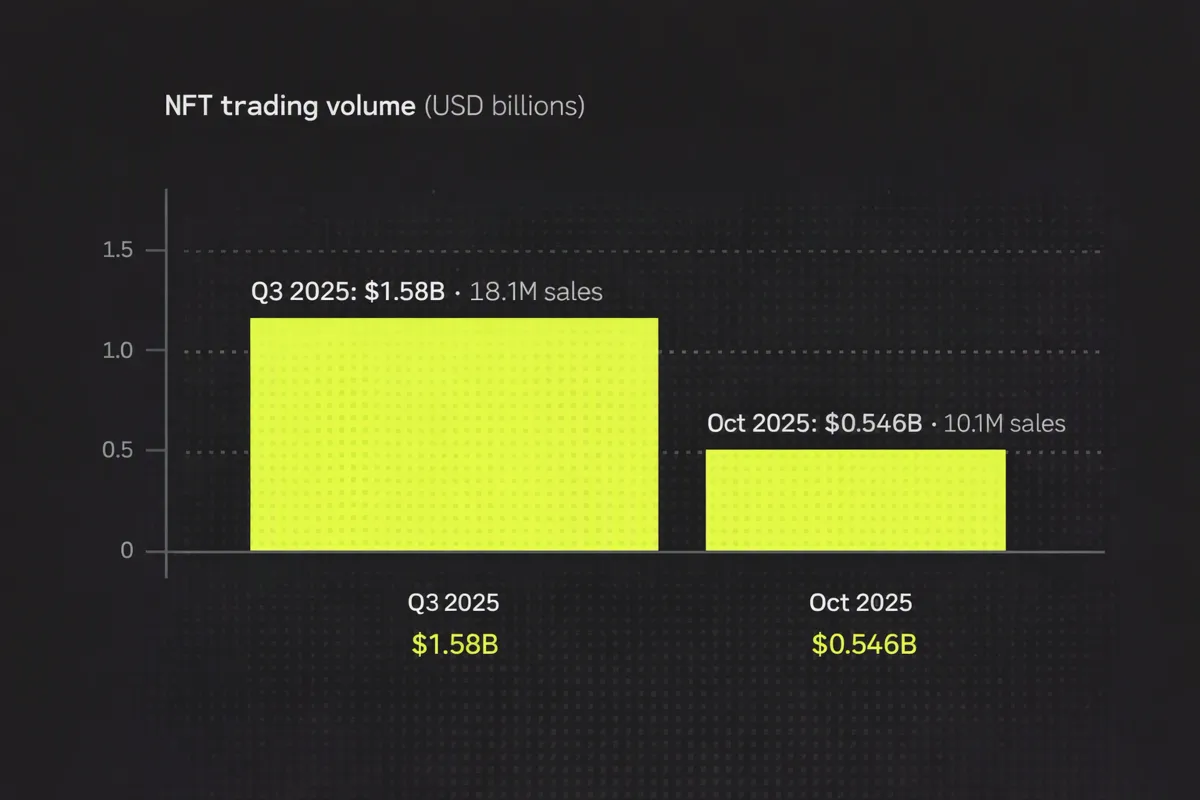
As of 2025, DappRadar data shows:
- 18.1M NFTs sold in Q3 2025, with $1.58B trading volume
- 10.1M NFT sales in October 2025 alone, with $546M in volume
Even in a “post-hype” cycle, that’s a lot of onchain activity to index and normalize.
Codex’s pipeline—built for token trades and prediction markets—maps directly:
- Ingest raw NFT trade events from multiple chains and contracts
- Normalize into “trade” entities with buyer/seller and USD prices
- Precompute OHLCV-style aggregates per collection for charting
5. NFT Floor Price API (Collection Stats)
A NFT floor price API answers: “What’s the lowest ask for this collection right now, and how active is it?”
Almost every marketplace and analytics site exposes floor stats. Typical collection stat surfaces include:
- Floor price (native asset + USD)
- 24h / 7d / 30d volume
- Sales count
- Unique owners / wallets
OpenSea’s collection stats and top-collection endpoints return these metrics, sorted by volume, floor, and sales windows.
Other providers like Alchemy and Bitquery aggregate floor prices across marketplaces. Alchemy’s getFloorPrice explicitly returns marketplace-specific floors.
Codex’s edge comes from its multi-network, normalized aggregates:
- It already computes liquidity, volume, holders, and OHLCV for tokens
- The same infrastructure can compute NFT collection floor, volume, and holder stats
- Because Codex optimizes for trading-grade accuracy and low latency, these numbers can safely power ranking, leaderboards, and pricing engines
How Codex Indexes NFT Data Without Bespoke Pipelines
The hard part of NFT marketplace data is not the schema—it’s the infrastructure. Raw chain logs are:
- Inconsistent across networks and marketplaces
- Expensive to index and store at scale
- Hard to keep in sync for real-time trading interfaces
Codex’s architecture solves this for tokens and prediction markets, and the same pattern applies to NFTs.
Codex’s Ingestion & Normalization Pipeline
Codex describes its pipeline as:
-
Ingest raw chain events
- Subscribe to blocks, logs, and marketplace contracts across 80+ networks
- Decode events (transfers, orders, sales) at thousands of transactions per second
-
Normalize into canonical entities
- Tokens, wallets, trades, pools, markets
- For NFTs, this maps to collections, NFTs, listings, bids, and sales
-
Enrich with off-chain and cross-chain context
- Real-time and historical USD prices
- Token metadata, scam filtering, and launchpad data
- Cross-chain wallet views for 700M+ wallets
-
Precompute trading views
- OHLCV (candles, volume)
- Liquidity and TVL-like stats
- Holder counts and wallet-level aggregates
-
Expose via one GraphQL-style API
- Queries for historical data
- Subscriptions for real-time streams
- Webhooks for event-driven backend logic
This is the same backbone powering Coinbase, TradingView, Uniswap, Magic Eden, Rainbow, MoonPay, and others. For NFT marketplaces, it means you don’t need to:
- Run your own RPC nodes and indexers per chain
- Maintain bespoke ETL pipelines for each marketplace
- Stitch together multiple vendors for prices, orders, and wallet data
You plug into Codex once, and treat NFTs as first-class data alongside tokens and prediction markets.
Using On-Chain Feeds to Power Marketplace Discovery
Discovery is where NFT marketplaces win or lose. The data feeds above directly support the surfaces users care about.
Collection Pages & Ranking
To build high-quality collection pages, you combine:
- NFT listings feed for active asks
- NFT bids feed for current demand
- NFT floor price API for anchor valuation
- NFT volume API per collection for activity and momentum
Typical UX patterns:
- Sort collections by 24h/7d volume and floor change
- Highlight rising collections with spikes in unique buyers
- Display per-collection order books (all active asks and best bids)
Codex’s aggregated metrics (volume, unique wallets, liquidity) give you these signals without custom analytics jobs.
Search, Filters, and Trait-Based Views
Real-time listings and bids streams enable:
- Search by collection and trait, filtered to currently listed NFTs
- Sorting by ask price, best offer, or time-to-expiry
- Alerts when new listings match saved filters
With Codex-style subscriptions, you can:
- Subscribe to listings for a trait or set of contracts
- Push updates into your search index and frontend
- Keep search results live without aggressive polling
Activity Feeds & Social Surfaces
Executed sales and bids drive:
- Live activity feeds (what’s selling now)
- Social trading features (following wallets and collections)
- Reputation metrics (e.g., volume per trader or collection)
Codex already powers social and analytics products that need this cadence. For NFTs, you re-use the same infrastructure with NFT-specific filters.
Powering Pricing & Charting Without Your Own Indexers
Accurate pricing is where generic chain data breaks down. For NFTs, you need both micro-level pricing (best ask/bid per NFT) and macro-level pricing (collection floors, trendlines).
Trading-Grade Price Feeds for NFT Marketplaces
Codex is designed for trading UIs, so its pricing architecture already includes:
- Real-time token prices (native asset and USD)
- Chart-ready OHLC and candle data
- Volume and liquidity metrics
For NFTs, you combine:
- NFT sale events -> price points
- Floor price API -> anchor valuation per collection
- Token price feeds -> USD conversions
This gives you:
- Daily / weekly price charts per collection
- Real-time floor moves on listing/sale events
- Profit & loss views per wallet
Using Aggregated Stats for Risk & UX
Beyond individual prices, product teams care about:
- Volume (how much is trading per period)
- Active wallets (how many unique buyers/sellers)
- Concentration (how many whales control supply)
Codex’s aggregated metrics (unique wallets, holders, liquidity) are built to answer these questions for tokens, and the same stats translate naturally to NFT collections.
You can:
- Flag thinly traded collections as higher-risk
- Prioritize collections with healthy owner distribution
- Build filters for “blue-chip” NFTs using volume and wallet metrics
Wallet & Portfolio Views: NFTs as First-Class Assets
Modern wallets and trading apps treat NFTs like any other asset:
- Users expect portfolio valuations including NFTs
- Product teams want unified wallet views across chains
- Analytics surfaces need trader-level performance metrics
Codex’s wallet-centric infrastructure makes this easier.
Cross-Chain Wallet Aggregation
Codex already indexes 700M+ wallets across 80+ networks. For each wallet, you can:
- Fetch balances and holdings
- See trade and transfer history
- Aggregate token and prediction market data
With NFT-aware indexing, you add:
- NFT ownership per wallet (by collection and chain)
- Historical buy/sell events and realized P&L
- Floor-based valuation of current holdings
This lets you build:
- Unified portfolio dashboards for tokens + NFTs
- Trader profiles for marketplace frontends
- Social ranking and leaderboards based on NFT performance
Event-Driven UX with Webhooks
Codex’s webhook support lets you:
- Trigger alerts when a wallet buys/sells an NFT
- Recalculate portfolio values when floor prices change
- Run risk checks when large positions move onchain
You don’t need bespoke NFT event processors; you configure webhooks on Codex’s API and route events to your backend.
Build vs Buy: Why Product Teams Offload NFT Indexing
Engineering and product leaders at CEXs, DEXs, wallets, and NFT marketplaces consistently choose to buy their data layer rather than build it from scratch.
Common reasons:
- Running indexers across 40–80+ chains is a major DevOps burden
- NFT smart contract heterogeneity makes decoding complex
- Maintaining low-latency pipelines is non-trivial at high traffic
Providers like OpenSea, Alchemy, and Bitquery solve specific slices: marketplace-native events, ownership/metadata, or multi-chain trades.
Codex’s differentiation is:
- Trading-grade performance: sub-second response times, streaming chart data
- Breadth: 70M+ tokens, 80+ networks, 700M+ wallets, prediction markets
- Unified API: tokens, wallets, and markets in one GraphQL surface
NFT marketplaces benefit from this unified, infrastructure-grade backbone—the same stack powering Coinbase, TradingView, Uniswap, and Magic Eden.
If you’re also building token-aware trading features (e.g., ADA markets, DeFi positions), you can go deeper on how Codex handles coin data in this related guide: ADA to USD and Top ADA Coin Data: Powering Trading Apps with On‑Chain APIs.