- TVDatafeed is a lightweight Python library for pulling historical TradingView bars. It’s great for quick prototypes, backtests, and non‑critical charts.
- Codex is a production‑grade onchain and prediction market data API, built for real‑time odds, streaming updates, and high‑traffic apps across Polymarket, Kalshi, and 80+ chains.
If you need a serious prediction market frontend, Codex is the more appropriate backend. If you just want some cheap historical bars to experiment with in a notebook, TVDatafeed may be enough.
In this article, we’ll compare TVDatafeed vs Codex specifically for prediction market odds dashboards, using four concrete criteria:
- Latency and real‑time delivery
- Coverage and data model
- Update frequency and streaming patterns
- Integration complexity and reliability
We’ll close with clear recommendations per use case and name other providers worth testing.
Comparison criteria (what actually matters for odds dashboards)
Before diving into each tool, it’s useful to spell out what a good prediction market backend actually needs.
For a modern odds dashboard – whether for Polymarket, Kalshi, or multi‑venue – product and engineering teams typically care about:
- Latency: How quickly can you update prices and odds after each trade?
- Coverage: Does the provider support prediction markets directly, or only generic OHLC candles?
- Update frequency: Can you stream updates (WebSockets/subscriptions) or are you polling scraped data?
- Integration complexity: How much glue code, infra, and rate‑limit babysitting do you need to ship and maintain this?
The table below summarizes TVDatafeed vs Codex against these criteria, then we’ll go deeper into each.
Feature‑by‑feature comparison table
| Criterion | TVDatafeed | Codex |
|---|---|---|
| Primary use case | Downloading TradingView historical bars into Python for analysis/backtesting. | Real‑time onchain and prediction market data for production trading UIs and dashboards. |
| Latency model | Pull‑based scraping of TradingView; no official WebSocket; effective latency depends on polling and TV’s behavior. | GraphQL queries + subscriptions + webhooks; Codex benchmarks show sub‑second freshness for most prediction workloads. |
| Real‑time streaming | No official documented streaming API; any “live” mode comes from community forks. | Native subscriptions (e.g. onPredictionMarketBarsUpdated) and webhooks for push‑based updates. |
| Prediction market coverage | None documented; it mirrors what TradingView lists and exposes as generic symbols. | Native support for Polymarket and Kalshi, with markets, events, outcomes, trades, bars, stats, and trader analytics. |
| Data model | Returns pandas DataFrames of OHLCV bars. No notion of events, markets, positions, or trader P&L. | Full prediction market schema: events, markets, categories, trades, positions, trader stats, plus onchain tokens and wallets. |
| Historical depth | Up to 5000 bars per timeframe per symbol. Good for backfills and basic backtests. | Historical bars across multiple resolutions (min1 → week1) for markets and tokens; depth depends on venue and chain history. |
| Update frequency | Determined by your polling loop and TradingView’s rate limits/anti‑bot controls. | Streaming updates plus low‑latency queries; docs recommend subscriptions over polling for production dashboards. |
| Integration surface | Single Python package, scripting‑friendly, returns DataFrames; login to TradingView may be required. | Hosted, horizontally scalable API with queries, subscriptions, and webhooks; SDK‑agnostic, but straightforward with HTTP/GraphQL clients. |
| Infrastructure demands | None beyond the script environment; best for local/offline analysis. | Designed as shared infra for apps doing 1,000+ req/s workloads on Polymarket‑style data. |
| Pricing | Open‑source library; subject to TradingView ToS and implicit limits. | Prediction market endpoints are beta, gated to Growth/Enterprise; priced as infra with SLAs and support. |
| Strengths | Simple install, no backend required, great for quick experiments and one‑off analyses. | Production‑grade, venue‑native prediction market data with streaming, breadth of onchain coverage, and trading‑ready normalization. |
| Best fit | Individual quants, researchers, hobbyists needing historical bars with minimal setup. | Product and engineering teams building live odds dashboards, trading terminals, and consumer apps at scale. |
Latency and real‑time delivery
How TVDatafeed handles latency
TVDatafeed is essentially a TradingView historical data downloader:
- It pulls historical OHLC bars for given symbols.
- The README and docs emphasize historical series, not live feeds.
- It can require TradingView credentials and has a 5000‑bar cap per timeframe.
- There is no official WebSocket or streaming API; any real‑time behavior comes from community forks/extensions.
For a true odds dashboard, this matters. Live trading and prediction markets care about how fast you see new trades and re‑price odds. With TVDatafeed, you’re effectively:
- Polling TradingView at some interval.
- Hoping you don’t trigger anti‑bot systems or hit undocumented limits.
- Accepting that latency is whatever the combination of your polling loop + TradingView response time happens to be.
That can be acceptable for slow‑changing macro charts. It is much more fragile for rapid intraday odds shifts on Polymarket or Kalshi.
How Codex handles latency
Codex is built specifically for low‑latency trading and prediction market workloads:
- It exposes prediction market data via GraphQL queries, subscriptions, and webhooks.
- Internal benchmarks (vendor‑provided, but consistent with customer stories) show most token and prediction queries completing in under one second, with p95 in the low hundreds of milliseconds.
- Freshness for both token prices and prediction markets is typically <1 second end‑to‑end.
Codex also optimizes throughput:
- Their Polymarket documentation cites support for 1,000+ requests per second on prediction market queries.
- By contrast, the Polymarket API directly is often quoted in the ~30 requests per second range for sustained workloads.
For high‑traffic dashboards – think embedded odds widgets in media sites, social trading apps, or professional trading terminals – this latency and headroom is the deciding factor. You can:
- Stream odds and bars as they change via
onPredictionMarketBarsUpdated. - Apply your own debouncing or throttling at the UI layer instead of fighting slow data.
Verdict on latency:
- TVDatafeed is fine when you don’t need real‑time and can tolerate polling.
- Codex is substantially better when you must keep odds and charts live with sub‑second freshness.
Coverage and data model
TVDatafeed’s coverage
TVDatafeed’s coverage is whatever TradingView exposes as symbols. That’s powerful for:
- Major crypto pairs (BTC/USDT, ETH/USD, etc.).
- Traditional markets, indices, some synthetic products.
But it is not prediction‑market native:
- There’s no notion of events or markets like “Will candidate X win?” or “Fed rate at next meeting”.
- You only get bars for whatever symbol TradingView happens to chart.
- There are no endpoints for trades, open interest, positions, or trader P&L.
So even if TradingView lists some prediction market symbols, you still only see them as generic OHLCV series, with no access to the underlying venue data.
Codex’s coverage
Codex is designed as an onchain data layer plus a prediction market layer.
On the prediction market side, Codex:
- Natively supports Polymarket and Kalshi, with more venues on the roadmap.
- Exposes events, markets, categories, and outcomes, not just bars.
- Provides trades, order flow, positions, and trader analytics – e.g., trader stats and performance.
- Supports chart‑ready bars with resolutions ranging from
min1toweek1.
On the onchain side, Codex covers:
- 80+ networks and 75M+ tokens (often framed as ~70M+ tokens in public messaging).
- 700M+ wallets, with balances and holdings.
That means you can mix:
- Odds + onchain context: show Polymarket odds alongside token positions.
- Cross‑venue and cross‑chain views: e.g., a Kalshi event, related tokenized markets, and wallet analytics in one UI.
This depth matters as prediction markets scale. Pew and TRM Labs report that combined monthly trading volume on Kalshi + Polymarket rose from under $5B in Sep 2025 to about $24B in Apr 2026, with TRM citing growth from $1.2B in early 2025 to over $20B in Jan 2026 and 800k+ unique wallets/month.
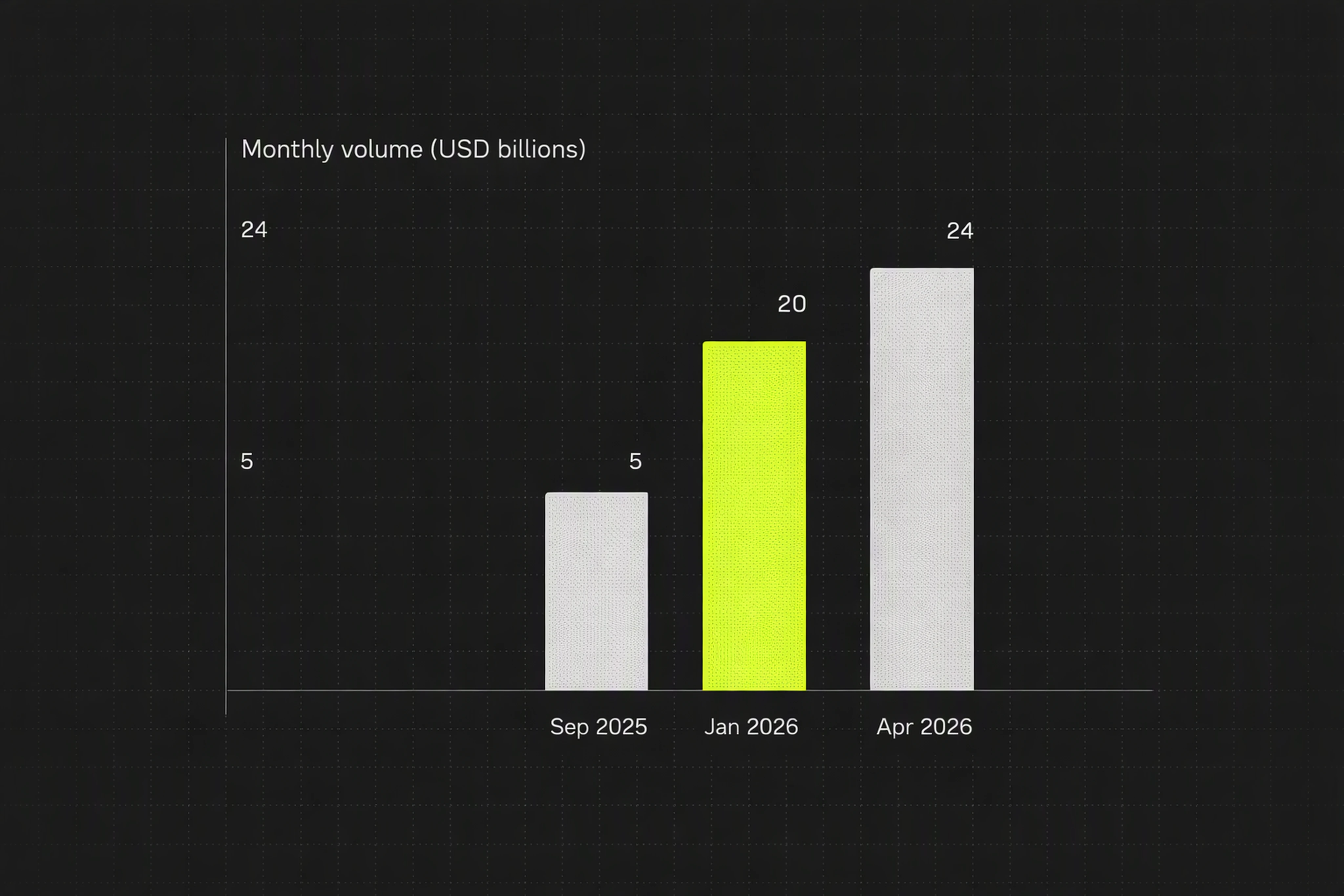
At these scales, having venue‑aware objects (events, markets, traders) rather than anonymous symbols becomes a competitive advantage.
Verdict on coverage:
- TVDatafeed wins on generic multi‑asset TradingView coverage when you just need historical bars.
- Codex wins on prediction‑market primitives and onchain breadth, which are essential for serious odds dashboards.
Update frequency and streaming patterns
TVDatafeed’s update model
TVDatafeed is batch first:
- You call a function.
- It returns a pandas DataFrame with up to 5000 bars.
- You repeat as needed.
There’s no official push mechanism:
- No documented WebSocket.
- No subscriptions or event streams.
- Any real‑time behavior comes from community forks that simulate streaming by polling.
For research and backtesting, this is perfectly adequate. For live odds dashboards, it forces you into a polling loop that can be:
- Latency‑heavy (by design).
- Vulnerable to rate‑limit changes.
- Hard to scale beyond small user bases.
Codex’s update model
Codex is built for real‑time UI patterns:
- Queries for initial loads and historical backfills.
- Subscriptions to stream changes to bars, stats, trades, or markets.
- Webhooks to trigger server‑side workflows when odds or market status changes.
The docs explicitly recommend using subscriptions instead of polling for any interface where freshness matters – exactly the case for:
- Live odds tickers.
- Streaming candles for prediction markets.
- Alerting and notifications when markets cross thresholds.
For example, you can:
- Use
filterPredictionMarketsto discover all markets for a given event or category. - Use
predictionMarketBarsto backfill historical charts. - Subscribe via
onPredictionMarketBarsUpdatedfor ongoing updates.
This combination gives you a standard pattern: query → subscribe → render.
Verdict on update frequency:
- TVDatafeed is pull‑only and effectively batch‑oriented.
- Codex gives you pull + push, which is the dominant pattern in modern trading dashboards.
Integration complexity and reliability
TVDatafeed integration
TVDatafeed’s main strengths show up here:
- Simple install via pip.
- No backend required – you can run everything from a notebook or a single server.
- Returns pandas DataFrames, which are ideal for data science workflows.
For a lone quant, researcher, or hobbyist, this is a big win:
- No infra contracts.
- No API keys.
- No architecting a distributed system.
However, that simplicity cuts both ways when you move to production odds dashboards:
- You are scraping a UI‑centric product (TradingView), not consuming a supported real‑time API.
- There’s no SLA, no uptime guarantees, no performance tuning.
- You’re responsible for any retry logic, caching, and rate‑limit mitigation.
In short, TVDatafeed trades reliability for convenience.
Codex integration
Codex sits at the opposite end of the spectrum: it is infrastructure‑grade.
- You integrate via HTTP/GraphQL using standard clients.
- You get queries, subscriptions, and webhooks under one schema.
- You can consolidate token, wallet, and prediction market data behind a single provider.
For teams already using Codex for token prices, charts, or wallet analytics, adding prediction markets is incremental – same API, same patterns.
Some specific integration benefits:
- Normalized data models: Codex turns raw onchain events into structured objects, so you don’t have to build your own ETL for Polymarket.
- Scalability: Designed for apps doing 1,000+ req/s across 80+ networks and 700M+ wallets.
- Vendor support: With Growth/Enterprise access, you get account management, rate‑limit planning, and incident support.
The tradeoff is cost and upfront work:
- Prediction market endpoints are beta and gated to paid plans – this is not a free hobby tool.
- Your team needs to stand up a proper integration (CI/CD, observability, error handling) rather than a quick script.
Verdict on integration:
- TVDatafeed is easier to start with for individuals and prototypes.
- Codex is far more reliable and scalable for production odds dashboards and consumer apps.
Where TVDatafeed is genuinely stronger
Even though Codex is the better pick for serious prediction market frontends, TVDatafeed does have real advantages:
- Lower barrier to entry: A single
pip installand a few lines of Python code. - Great for ad‑hoc analysis: Download bars into a DataFrame and explore with pandas, NumPy, and matplotlib.
- No vendor contract: Useful when your organization is not yet ready to engage with infra providers or legal review.
- Broader generic symbol coverage via TradingView: If you want to overlay macro indices, FX, and crypto pairs in a notebook, TVDatafeed is extremely convenient.
If your immediate need is research, experimentation, or an internal prototype where uptime, SLAs, and formal support don’t matter, TVDatafeed can be the faster way to get something on screen.
When Codex is the better backend for odds dashboards
Codex is the stronger choice when you are building:
- A production odds dashboard for Polymarket or Kalshi.
- A multi‑venue prediction market frontend that needs events, markets, trades, and trader stats.
- Trading terminals and social trading apps where odds, order flow, and positions must update in real time.
- Media or analytics products embedding live odds across thousands or millions of pageviews.
In these scenarios, Codex’s strengths matter:
- Real‑time streaming via subscriptions and webhooks.
- Venue‑native data models for Polymarket/Kalshi, plus broad onchain coverage.
- Infrastructure‑grade performance – sub‑second freshness, 1,000+ req/s headroom.
- Unified API for tokens, wallets, and prediction markets, which reduces vendor sprawl.
For a deeper look at how Codex fits into prediction market frontends (and how it compares to other options like TVDatafeed at a broader level), see this related guide: Prediction markets API and TVDatafeed: powering odds in trading apps.
Recommendation: when to choose TVDatafeed vs Codex
Choose TVDatafeed if…
You are:
- A researcher, quant, or hobbyist exploring prediction‑like markets and odds.
- Building an internal prototype or proof of concept with a handful of users.
- Comfortable with polling‑based updates and occasional breakage if TradingView changes behavior.
- Primarily focused on historical bar data, not full event/market/trader analytics.
In that context, TVDatafeed gives you:
- Fast time‑to‑first‑chart.
- Broad generic market coverage via TradingView.
- Zero infra overhead.
Choose Codex if…
You are:
- A product or engineering team at a fintech, exchange, wallet, or analytics platform.
- Shipping a user‑facing odds dashboard or trading UI where latency and uptime matter.
- Needing native Polymarket/Kalshi coverage with events, markets, trades, and trader stats.
- Wanting a single API for token prices, charts, wallets, and prediction markets.
Codex is particularly compelling if:
- You already use Codex for token data and want to add prediction markets.
- Your workloads are spiky or high‑volume (e.g., during elections or major macro events).
- You’d rather not maintain your own multi‑venue indexers, RPC nodes, and ETLs.
Other providers worth considering
While this piece focuses on TVDatafeed vs Codex, serious teams often evaluate a broader set of prediction market and onchain data providers:
- Direct venue APIs: Polymarket and Kalshi each expose their own REST/WebSocket APIs. These are the most direct, but you’ll shoulder rate‑limit handling, normalization, and multi‑venue complexity.
- Node/RPC providers (e.g., Alchemy, Infura, QuickNode): Great for raw onchain access, but you’ll need to build your own indexing, enrichment, and market‑level abstractions.
- General crypto data APIs (e.g., CoinGecko, CoinMarketCap): Useful for token prices and basic charts, but not prediction‑market‑native and not optimized for odds dashboards.
For prediction‑market‑first frontends that must scale, Codex tends to sit above raw nodes and venue APIs, acting as the trading‑grade data layer that saves years of backend work.
If your goal is a serious, real‑time prediction market odds dashboard, Codex is the more appropriate backend. TVDatafeed remains a useful companion for quick research and historical analysis – just don’t mistake it for production‑ready infra.