Codex and GliderThe pricing layer behind Glider

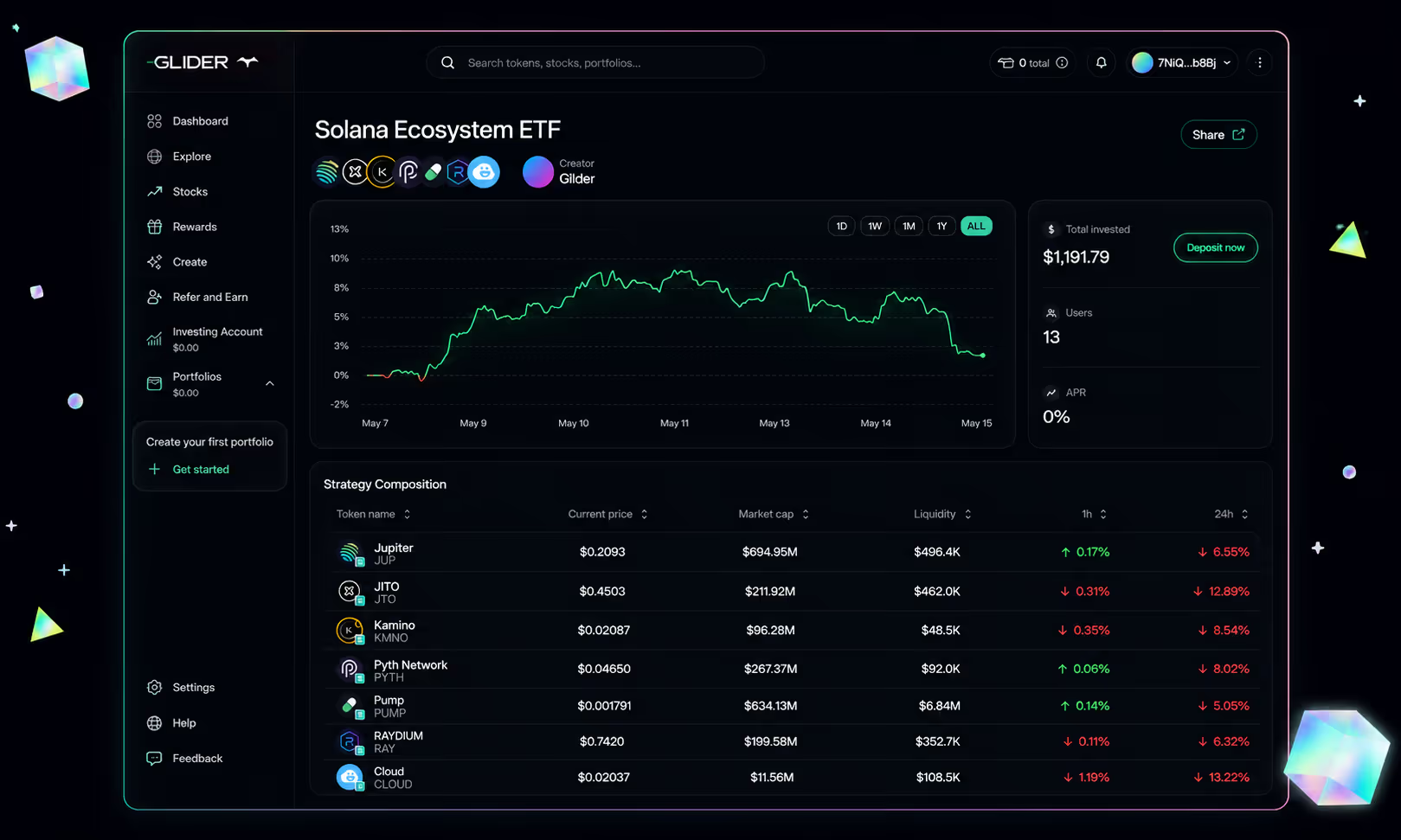
Glider is a portfolio management platform on crypto rails, built for the next wave of onchain investors. Codex powers accurate, real-time pricing across every chain Glider supports, so the team can focus on building instead of pricing infrastructure.
JJ has watched the DeFi pricing problem expand for years.
He started using Codex in the early days of onchain aggregation, including during his time at 0x, when liquidity was beginning to fragment across venues.
At first, crypto pricing was relatively simple. A Uniswap v1 pool had ETH and another asset, the midpoint was the price, and a small set of assets mattered.
Then the market changed.
Aggregators, new DEXs, L2s, non-EVM chains, launchpads, wrapped tokens, staked assets, rebasing tokens, lending markets, tokenized equities, and long-tail assets all made "the price" harder to define.
There are now 80+ million assets across 100+ chains and countless combinations of liquidity sources.
"Pricing is the most important thing you give a customer. If you don't have a cardinal direction for what something is worth, you don't have security or trust with your users. And It's harder than people think."
That complexity is exactly why JJ refuses to build pricing in-house. He has had the build-versus-buy conversation with multiple engineering leaders who looked at the Codex line item and assumed pricing must be something they could solve over a weekend.
"I have literally had to defend Codex from amazing executives with fancy degrees. They come in and say, 'pricing is easy, I can do this.' Okay, sit down. Let's talk about what a price actually is."
His read on it is straightforward. Crypto is one of the last places a small team can build from a garage, but pricing infrastructure is not where to spend that advantage.
"Crypto is the last bastion of being able to start Apple in your garage. You just have to know what to build and what not to build. I want to build product. Codex builds the pricing infrastructure."
– JJ, Co-founder, Glider
4+
Products JJ has shipped on Codex
1 of 3
Things JJ installs first when starting any new product
$2T+
Estimated RWA onchain by 2030
"I can spin up a UI. I cannot spin up Codex. Don't try to price all the assets on every chain ever. Just don't. I'll see you in three years, gray and impoverished."

JJ, Co-founder, Glider
Why JJ keeps choosing Codex
Glider is not the first product JJ has built on Codex.
He has brought Codex into every company and R&D project he has been part of since 0x, including the Matcha DEX aggregator, the Smol Studios product studio that worked with VCs like Paradigm, his ongoing R&D at Anagram, and Glider today.
"Codex is one of three things I install on every project I start. DeFi revolves around pricing. There's nothing that isn't priced, for better or worse."
When asked what makes Codex stick across so many different products, JJ keeps coming back to the same handful of things:
"I point my agents at your docs and let them go to town. I've internalized the API well enough that I can guide it, and the rest the agent handles."
The cumulative effect is that JJ's teams keep their attention on the product, not the data layer.
Glider can spend its time on the parts of portfolio management that nobody has solved yet, like asset taxonomies for RWAs, after-hours pricing for tokenized equities, and tax-aware execution.
Everything else comes off the shelf.
"If you told me I had to build a mobile trading app tomorrow, Codex is the first pick of my roster. Add an RPC, add a host, and the rest is up to you to build."
Glider gets to focus on the next category of onchain finance without first becoming a pricing infrastructure company.
They build products. Codex handles the pricing.
Sign up and get free access to real-time and historical pricing, charts, and aggregates for tokens and wallets.