Why Onchain Data Reliability Matters More Than Uptime
For trading terminals, wallets, and prediction market front‑ends, “the API is up” is not the same as “the data is reliable.”
You can have 100% API uptime and still:
- Show prices based on blocks that later get reorged
- Miss volumes for a few thousand blocks during a chain stall
- Serve stale balances because an indexer fell behind
Government data‑quality frameworks explicitly define reliability as part of a broader “fit for purpose” model. They emphasize nine dimensions, including accuracy, completeness, consistency, reliability, and timeliness—and warn that no dataset can be perfect across all dimensions at once.
On‑chain data is no different.
This article explains how to define and measure on‑chain data reliability, why it commonly breaks in production, and how Codex’s enrichment and validation pipelines are designed to mitigate these risks for high‑scale, trading‑grade apps.
A Practical Definition: What Is Reliable Onchain Data?
For product and engineering teams, “reliable” must be measurable, not a slogan.
A practical definition of reliable on‑chain data:
Data that is fresh, canonical, complete enough, and internally consistent, with known behavior under chain failures and a clear path to recovery.
That boils down to a few core questions:
- How far behind the chain is my view? (freshness / timeliness)
- How often do I need to roll back because of reorgs? (canonicality)
- How much data is missing or partially indexed? (completeness)
- How often do validation checks fail? (correctness)
- How quickly does the system heal after upstream failures? (recovery)
You can’t optimize all of these to perfection simultaneously. Just like the UK and Canadian data‑quality frameworks note, timeliness often trades off against completeness. A trading UI might accept occasional short‑range rollbacks for ultra‑low latency, while an accounting system may prefer slower, fully finalized data.
Key Reliability Metrics for Onchain Data Pipelines
You can’t improve what you don’t measure. For on‑chain data APIs, the most defensible service level indicators (SLIs) are:
1. Freshness Lag
Question: How far behind head is your view of the chain?
Practical metrics:
- Median lag between latest indexed block and network head
- P95/P99 lag for worst‑case paths (e.g., long‑tail tokens, cross‑chain events)
- End‑to‑end latency from on‑chain event to API query or webhook delivery
Codex, for example, delivers enriched token and prediction market data with sub‑second query latencies across 80+ networks and 70M+ tokens, even while handling thousands of transactions per second.
2. Canonicality & Reorg Rollback Rate
Question: How often do you have to correct or roll back previously delivered data?
On Ethereum and similar chains:
- Blocks are produced in 12‑second slots and grouped into 32‑slot epochs
- Finality is typically reached in ~15 minutes, after which reverting a block is extremely expensive
- Short reorgs are normal before finalization
Track:
- Number and length of reorgs observed
- Percentage of data points corrected due to reorgs
- Time to propagate corrections to downstream consumers
A reliability‑aware provider must support reorg detection and mitigation as a first‑class concern, not an edge case.
3. Completeness & Coverage
Question: How much of the relevant universe do you index, and how often do you partially miss it?
Important metrics:
- Network coverage: e.g., 80+ chains, 16 launchpads, 700M+ wallets
- Asset coverage: long‑tail & launchpad tokens vs only blue chips
- Partial indexing events (where some but not all contracts or logs were processed)
- Indexing error rate per chain / feed
Systems like The Graph expose Proof of Indexing (POI) and _meta.hasIndexingErrors flags to make this measurable. Codex takes a similar mindset with deterministic per‑chain ordering and validation checks across its enrichment pipeline.
4. Validation-Failure Rate
Question: How often does your pipeline detect internal inconsistencies?
Examples:
- Price outliers beyond configured thresholds
- Liquidity or volume metrics that don’t reconcile with underlying trades
- Balances that don’t match the sum of inflows and outflows
Codex’s own status history shows that a Base pricing degradation was caused by inaccurate upstream prices, which temporarily broke aggregated bars and statistics until corrected. Tracking these failures—and exposing them transparently—is part of a serious reliability posture.
5. Recovery Time from Upstream Incidents
Question: When the chain stalls or your infra fails, how quickly do you recover?
Chain and infra incidents happen:
- Optimism reported a major outage on July 7, 2026 lasting ~2 hours due to an unsafe head stall
- Base shows 96.15% uptime for block production in June 2026
- Arbitrum reported a 16‑minute degradation on May 20, 2026
- Codex experienced a token data processing delay on June 8, 2026 due to Kafka producer timeouts
Measure:
- MTTR: mean time to recovery after chain stalls, RPC outages, or internal failures
- Graceful degradation behavior: what your API does while upstream data is degraded
A reliable API is explicit about its SLAs (e.g., API uptime vs network health) and provides visible status pages and incident histories.
Why Onchain Data Breaks in Production
Even if your dashboards look perfect in staging, real‑world mainnets behave differently. The main failure modes that break on‑chain data reliability are:
1. Reorgs and Transaction Finality
Reorgs are not bugs; they are part of how proof‑of‑stake chains work.
On Ethereum:
- Blocks can be reorganized before they are finalized
- Finality requires two‑thirds of total staked ETH to attest
- If more than one‑third of validators go offline or fail to attest correctly, liveness is affected and finality can be delayed
Common production failure patterns:
- Trading apps show trades that “disappear” after a short reorg
- Candlestick data (OHLCV) aggregates double‑count or skip trades
- Portfolio balances flicker between two states as blocks are reordered
Mitigation pattern:
- Design feeds that are reorg‑aware, with the ability to rollback aggregates and resend corrected payloads in finality order
- Attach
blockNumberto all time‑series data (e.g., prices, chart candles) to disambiguate multiple valid prices in the same second, especially on sub‑second block‑time chains
Codex implements reorg‑aware aggregates and idempotent ingestion, enabling safe rollback and re‑application of events without duplicated data or broken charts.
2. Partial Indexing and ETL Drift
Raw chain logs are noisy, inconsistent, and expensive to index at scale.
Partial indexing happens when:
- Some nodes or indexers fall behind while others continue
- A bug in a parser or ABI decoder skips specific events
- Indexing is paused for a subset of contracts during maintenance
Visible symptoms:
- Missing trades for specific pools or DEXes
- Incomplete holder lists for a token
- Charts with unexplained “flat lines” even while trading is active
Traditional ETL pipelines using self‑hosted indexers and RPC nodes are particularly vulnerable, because small changes (new chains, contract upgrades, launchpad events) require custom work.
Codex reduces this risk by:
- Maintaining a mature, centralized data enrichment pipeline across 80+ networks
- Converting raw events into normalized entities (tokens, trades, holders, OHLCV, liquidity, prediction markets)
- Running validation passes over aggregates to detect gaps or drift
3. Chain Outages and Stalls
Chains stall. RPCs hang. Rollup sequencers pause.
Because block production is not under your control, even the best‑engineered pipeline must handle:
- Unsafe head stalls, where new blocks stop but existing ones might still be reorged
- Latency spikes on L2s or sidechains
- Delayed finality, where finalized blocks lag far behind the tip
Real incidents:
- Optimism’s July 2026 outage lasted ~2 hours
- Base’s June 2026 block production uptime was 96.15%, leaving meaningful gaps
- Codex’s status page documents a Base Mainnet chain stall on June 25–26, 2026
In production, this can cause:
- Stale prices and TVL metrics
- Portfolio and PnL drift when chains resume
- Misleading dashboards that “smooth over” missing data
A robust provider like Codex implements graceful degradation per network:
- Flagging networks as degraded when block production stalls
- Surfacing health in status pages and (optionally) via API fields
- Resuming ingestion with deterministic ordering once chains recover
4. Upstream Data Inaccuracies and Vendor Drift
Many teams stitch together multiple providers: nodes from one vendor, price feeds from another, homegrown ETL on top.
This creates reliability issues such as:
- Inconsistent prices for the same token across endpoints
- Conflicting liquidity metrics between chains or pools
- Differing token metadata (decimals, symbols) across providers
The Codex Base pricing incident illustrates this: inaccurate upstream prices caused derived metrics—candles, volume, aggregates—to be wrong. A mature pipeline must:
- Detect outliers and validate price feeds
- Allow rollbacks and corrections across all downstream aggregates
- Provide one source of truth instead of multiple conflicting vendors
How Codex’s Enrichment & Validation Pipelines Mitigate Reliability Risks
Codex was built as infrastructure‑grade on‑chain data, not a side product.
Across 70M+ tokens, 700M+ wallets, and 80+ networks, Codex focuses on trading‑grade reliability by design. Here’s how.
Reorg-Aware Ingestion and Aggregation
Codex’s architecture assumes reorgs as a default, not an exception.
Key design choices:
- Idempotent ingestion: events can be safely re‑applied without duplicating trades or balances
- Per‑chain deterministic ordering: ensures consistent aggregate computation, even when blocks are replayed
- Reorg‑aware aggregates: OHLCV, volume, liquidity, and prediction market stats can roll back and re‑compute when chains reorganize
For streaming use cases, Codex supports subscription APIs and webhooks that deliver events in canonical order, with corrections when reorgs occur.
End-to-End Webhook Semantics: Exactly-Once with Deduplication
Push‑based pipelines are becoming the norm for high‑scale apps, replacing naive polling.
Codex webhooks are designed for exactly‑once semantics at the consumer level:
- Each event includes a
deduplicationIdso you can safely handle retries without double‑processing - A
groupIdensures ordered delivery per logical stream (e.g., a wallet or token) - The payload includes the full enriched object (token event, trade, etc.), so you don’t need a second enrichment call
This pattern mirrors best practices from providers like Quicknode Streams, but tailored to trading‑ready on‑chain entities rather than raw blocks.
Normalized, Trading-Ready Entities
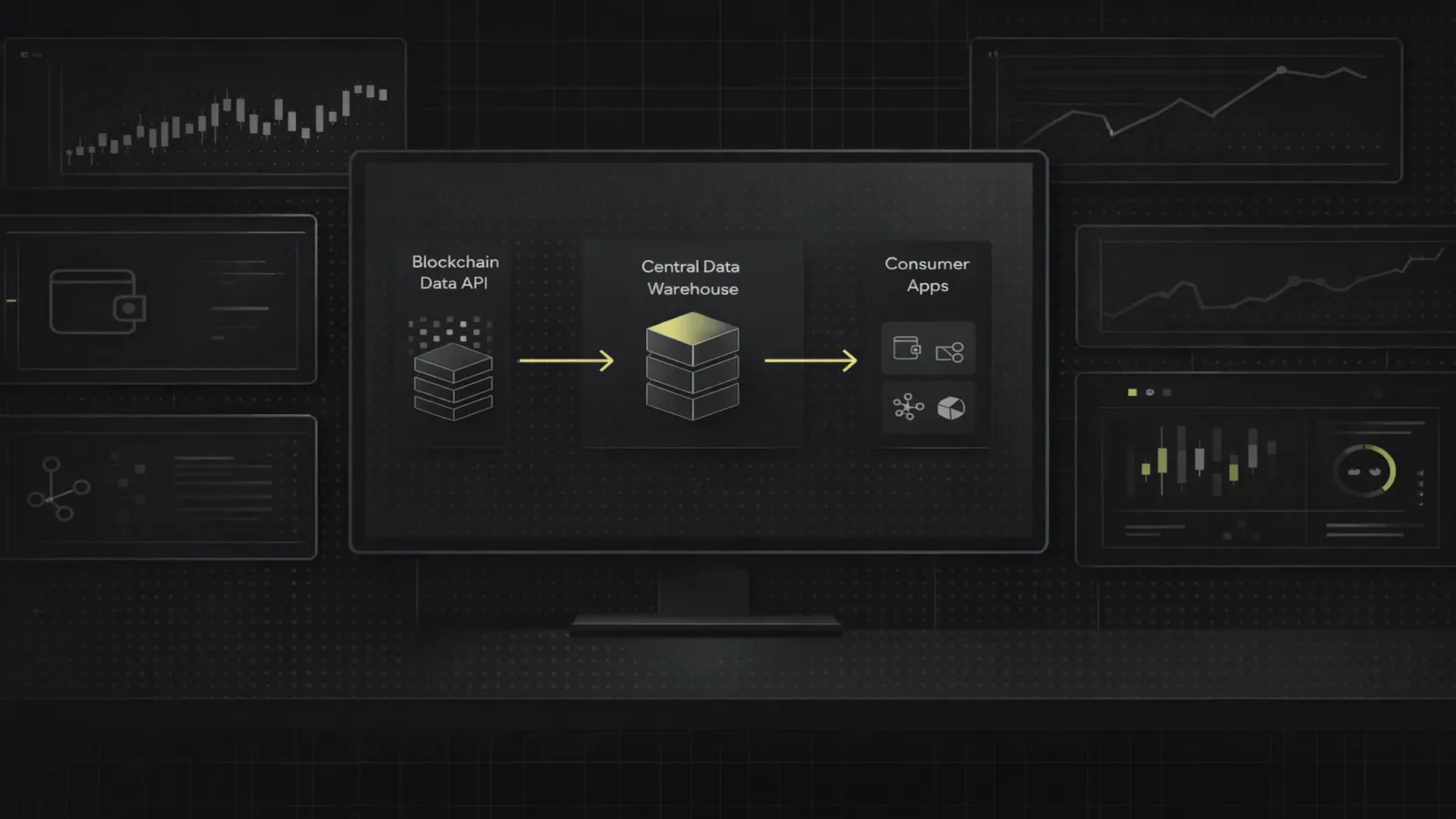
Instead of exposing raw logs, Codex serves enriched entities directly.
Core surfaces include:
- Token prices (USD and native)
- OHLCV / candle data for charting
- Aggregated metrics: liquidity, volume, unique wallets, TVL‑like stats
- Holders and balances across chains
- Scam‑filtered token metadata
- Prediction markets: events, markets, trades, trader analytics (Polymarket, Kalshi in beta)
Because Codex controls the full data enrichment pipeline, it can:
- Apply consistent token metadata across networks and launchpads
- Normalize decimals, symbols, and contract metadata
- Maintain cross‑chain wallet views and aggregates
That consistency directly improves blockchain data consistency metrics for downstream apps.
Freshness, Health Monitoring, and Transparent Status
Codex tracks its own reliability metrics and exposes them publicly.
From April 2026 to July 2026, Codex’s status page reports:
- 100% API uptime
- 99.87% network uptime (reflecting upstream chain incidents)
Incidents are documented with clear root causes, including:
- Base Mainnet chain stall (June 25–26, 2026)
- Token‑data processing delays due to Kafka producer timeouts (June 8, 2026)
- Base pricing degradation due to upstream price inaccuracies
This transparency is essential for teams building SLA‑backed trading apps; it lets you align your own reliability targets with your provider’s real performance.
Prediction Market Reliability (In Beta)
Prediction markets introduce a new on‑chain data surface: events, contracts, and trader‑level analytics.
Codex currently supports platforms like Polymarket and Kalshi via dedicated prediction‑market endpoints, but the docs explicitly note that this area is in beta and may be less reliable.
This is an important reminder: feature maturity matters in reliability assessments. For mission‑critical trading on prediction markets, treat beta feeds as:
- High‑value but non‑primary sources
- Candidates for dual‑sourcing with fallback behavior
- Observed closely with extra validation and monitoring
How to Operationalize Onchain Data Reliability in Your Stack
If you’re a product or engineering leader, here’s how to make on‑chain data reliability actionable.
1. Define SLIs and SLOs for Your Use Case
Start by deciding what “good enough” means.
For a trading interface:
- Freshness: median lag < 1s; P99 < 3–5s
- Canonicality: tolerate short reorg rollbacks; no more than X corrections per day
- Availability: API uptime > 99.9%
For a portfolio or accounting system:
- Finality: derive from finalized blocks only (e.g., 15+ minutes on Ethereum)
- Completeness: zero tolerance for missing blocks or trades
- Reconciliation: balances must reconcile with all historical inflows/outflows
2. Choose a Provider with Unified Coverage
Avoid stitching together multiple vendors for:
- Tokens and pricing
- Wallet balances
- Launchpads and long‑tail assets
- Prediction markets
A unified provider like Codex gives you a single GraphQL‑style API that covers all of these, reducing:
- Integration complexity
- Failure modes from mismatched data models
- Operational overhead for monitoring multiple SLAs
3. Make Your App Reorg-Aware
Treat reorgs as routine, not exceptional.
Implementation tips:
- Use APIs that expose block numbers and reorg metadata
- If you build your own pipeline, maintain idempotent handlers and event versioning
- Prefer providers that deliver correction events or replays when canonical chains change
4. Instrument and Alert on Reliability Metrics
Hook your monitoring into:
- Freshness lag (difference between current head and indexed block)
- Reorg corrections (count / rate)
- Indexing errors or validation failures
- Provider status pages (Codex, Base, Optimism, Arbitrum, etc.)
Build alerts around SLO violations, not just API 5xx errors.
5. Test Failure Modes in Staging
Before going to production:
- Simulate reorgs by rolling back and replaying events in your test environment
- Throttle or pause ingestion to simulate chain stalls
- Introduce upstream price or metadata errors to test validation
Your goal is to verify that your UX degrades gracefully, and that Codex (or your chosen provider) delivers the correction behavior you expect.