Trading‑Grade On‑Chain Data: More Than Just Fast RPCs
If you’re building a trading interface, wallet, prediction market frontend, or social investing app, the phrase “trading‑grade on‑chain data” should mean something very specific.
It’s not just about having access to nodes.
It’s about guaranteed speed, correctness, and resilience under real‑world load.
At Codex, we define trading‑grade on‑chain data as infrastructure that can reliably power millions of users, billions of requests, and volatile markets — with sub‑second latency and rigorous SLAs.
This piece breaks down what that standard actually looks like in practice:
- Strict SLAs and uptime guarantees
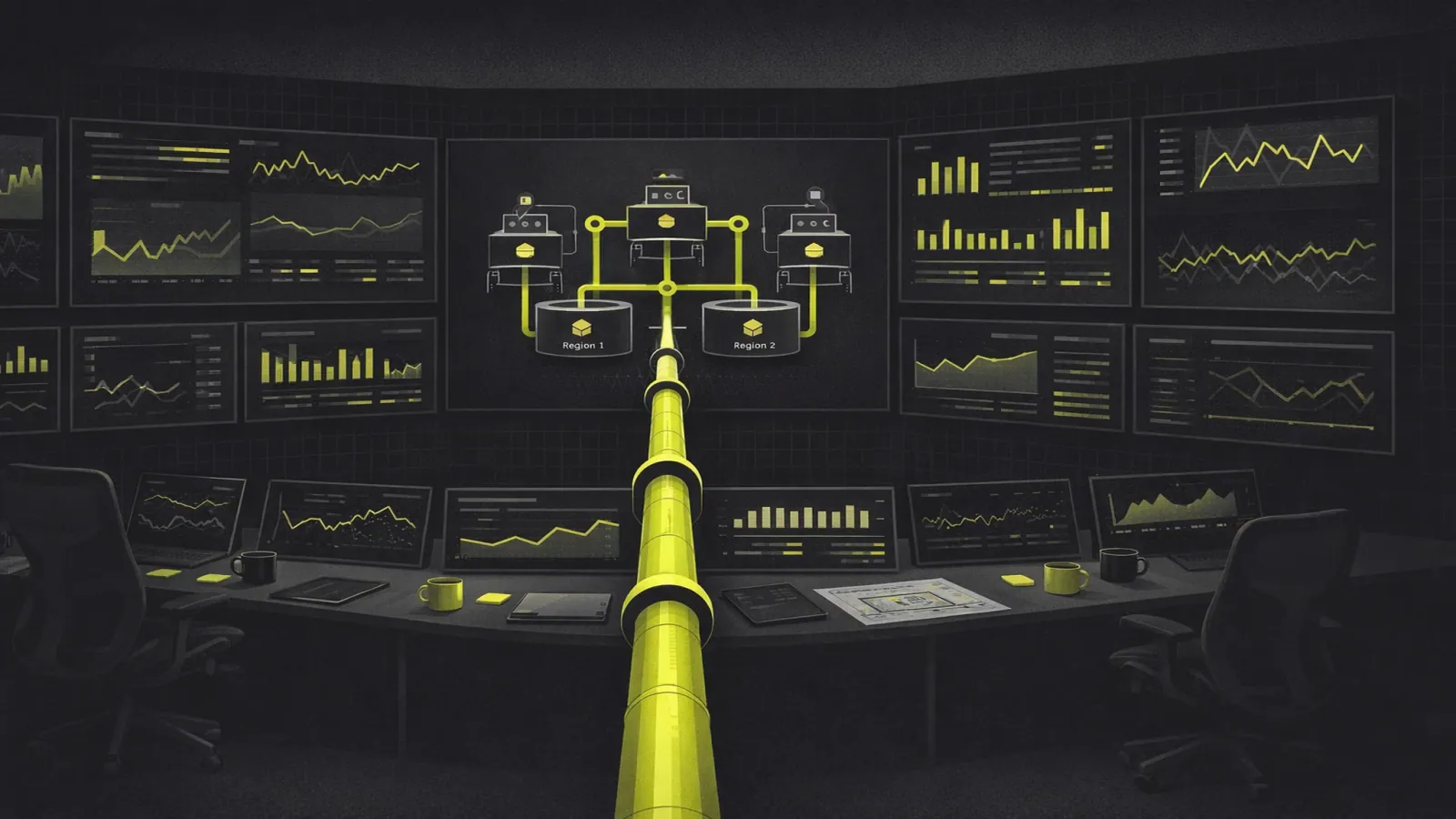
- Cross‑region redundancy and failover
- Data consistency models tuned for trading
- Real‑time backfill and reconciliation strategies
- How Codex designs for near zero‑downtime experiences across 80+ networks
Why “Trading‑Grade” Is a Different Bar
For hobby dashboards or explorers, occasional latency spikes or missing trades are annoying but survivable.
For trading‑adjacent products, they’re existential.
Trading apps have higher stakes
When you power:
- Spot and derivatives trading interfaces
- DeFi dashboards and portfolio/PnL views
- NFT marketplaces and launchpad token explorers
- Prediction market frontends on Polymarket or Kalshi
You’re operating in environments where:
- Millisecond latency affects execution and UX
- Data errors directly impact user trust and PnL
- Downtime during volatility leads to churn and reputational damage
This pushes infrastructure requirements beyond “good enough” RPC access.
Codex’s architecture is built specifically around those needs — not retrofitted onto an explorer.
The Four Pillars of Trading‑Grade On‑Chain Data
Trading‑grade on‑chain data rests on four core pillars:
- Strict SLAs for latency, uptime, and correctness
- Cross‑region redundancy and failover for high availability
- Data consistency models tuned for real‑time trading needs
- Reconciliation and backfill to keep aggregates correct under chain reorgs and spikes
Let’s unpack each in concrete terms.
1. SLAs: Turning Reliability Into a Contract
An SLA (Service Level Agreement) is the difference between marketing copy and a guarantee.
Across the infra ecosystem, top vendors are converging on explicit commitments:
- QuickNode: markets 99.99% uptime SLAs, median RPC latency under 50ms
- Alchemy: advertises 99.99% uptime over 100+ chains and multi‑cloud failover
- Helius: processes billions of daily requests at 99.99% uptime
- Chainstack: publishes a 99.9% quarterly uptime SLA with service credits
What a trading‑grade SLA should cover
For trading apps, an SLA needs to go beyond uptime percentages:
- Latency thresholds (e.g., p99 response times) for critical endpoints
- Pricing, charts (OHLC/candles), volume/liquidity aggregates
- Wallet balances and holdings
- Error rates and time‑to‑recovery for partial outages
- Data completeness guarantees
- No missing trades
- No double‑counted volume
- Backfilled gaps within defined windows
Codex publicly emphasizes:
- Sub‑second hot query responses for token and chart data
- 1,000+ RPS on higher tiers; ~300 RPS on Growth plans
- WebSocket layer marketed at 99.9% uptime for streaming charts/prices
For teams like TradingView (50M+ users), those guarantees are the difference between “data source” and “critical production infra.”
2. Cross‑Region Redundancy and Failover: Surviving Volatility
High availability isn’t a single checkbox.
It’s a system‑level design covering nodes, indexers, databases, caches, and API gateways.
Cloud guidance from AWS is clear: active/active multi‑region requires ongoing verification that:
- Traffic can seamlessly reroute
- The surviving region can absorb full load
- Backup and recovery are tested regularly
What cross‑region redundancy looks like for on‑chain data
Trading‑grade on‑chain data infrastructure typically includes:
- Redundant node clusters per chain
- Multiple providers, geographies, and configurations
- Automated health checks and node rotation
- Multi‑region data planes
- Replicated indexes and aggregates
- Region‑local read replicas for low latency
- Automated failover at multiple layers
- Load balancers shifting traffic on health signals
- Routing away from degraded networks or providers
Helius, QuickNode, and Alchemy all highlight regional endpoints and automatic failover as core differentiators.
Codex applies similar principles, but focused on enriched, trading‑ready data rather than raw RPC:
- Per‑network ingestion pipelines designed to handle thousands of transactions per second
- Live‑tail and backfill streams that can shift across regions without breaking downstream aggregates
Zero‑downtime is an aspiration — but you can get close
True zero‑downtime across 80+ networks is a high bar.
In practice, trading‑grade means:
- No single region failure takes you down
- Partial degradations are contained (e.g., one chain or launchpad impacted)
- Failover is fast enough that trading UX stays responsive and charts don’t freeze during volatility
For the builder, the question is simple: can my users trade and view PnL when everything is spiking?
If not, the data layer isn’t trading‑grade.
3. Data Consistency Models: Strong Enough for Trading
On‑chain data is naturally messy.
Blocks can reorg, events can replay, and different chains have different finality and latency characteristics.
Cloud databases like DynamoDB default to eventual consistency for reads; strongly consistent reads are available but come with tradeoffs.
For trading, you need a blended approach:
Where you need strong consistency
Certain surfaces must behave like strongly consistent systems:
- Balances and holdings
- A wallet’s token balances across chains
- Ownership lists for NFTs or positions
- Aggregates that drive trading decisions
- OHLC and candle data
- Volume, liquidity, unique wallets
- TVL‑like stats
If a chart double‑counts volume or misses trades during a reorg, your PnL views and risk dashboards become unreliable.
Codex designs its pipeline with:
- Idempotent processing so replayed events don’t double‑count
- Reorg‑aware aggregates that update downstream metrics when blocks reorg
- Backfill vs live‑tail handling to keep historical and real‑time views aligned
Where eventual consistency is acceptable
Not every surface needs instant correctness.
Eventual consistency works well for:
- Long‑tail token metadata and scam filtering
- Portfolio analytics refreshed on minute‑level intervals
- Slow‑moving leaderboards and curiosity dashboards
The key is designing your product so that:
- Trading‑critical paths (order tickets, PnL, live charts) rely on strongly consistent or reconciled views
- Exploratory surfaces can trade off strictness for scale and cost
Codex’s unified API reflects that split, giving teams control over endpoints, refresh strategies, and subscription patterns.
4. Reconciliation & Backfill: Keeping Data Correct Over Time
Indexing on‑chain data isn’t a one‑and‑done process.
Reorgs, node hiccups, and network upgrades all create gaps and edge cases.
A trading‑grade system treats reconciliation and backfill as first‑class concerns.
Typical reconciliation strategies
Robust data pipelines usually combine:
- Live‑tail ingestion
- Subscribing to new blocks/events in real time
- Streaming into normalized objects: tokens, trades, candles, holders
- Backfill indexers
- Walking historical blocks to fill past gaps
- Rebuilding aggregates when reorgs or data issues are detected
- Consistency checks
- Cross‑checking volumes across venues
- Detecting missing trades against external references
Codex has spent years building such pipelines across 80+ networks, 70M+ tokens, and 700M+ wallets.
That maturity is what lets TradingView use Codex as its sole source of truth for on‑chain data, yielding:
- 15 seconds faster responses
- 2M additional tokens indexed
- 200+ engineering hours saved
And what let Sudoswap:
- Save $50,000+ annually in AWS costs
- Improve application load times by 60%
- Save 1,000+ developer hours
Trading‑grade infrastructure makes these outcomes routine instead of lucky.
5. Prediction Markets: Bringing Trading‑Grade Standards to a New Vertical
Prediction markets are structurally similar to trading venues, but with more complex lifecycle events.
Research on Polymarket shows the scale involved:
- 1.20 billion trade records
- 1.30 million markets
- $61 billion in nominal volume
Academic datasets highlight fragmented records across:
- Market creation
- Token registration
- Trading
- Oracle interaction
- Dispute resolution
- Settlement
Why prediction market data needs trading‑grade infra
For Polymarket and Kalshi frontends, the same requirements apply:
- Near real‑time updates for prices and market probabilities
- Correct lifecycle transitions (open, resolving, settled)
- Trader analytics that reflect reality during disputes and oracle events
Codex’s prediction‑market beta addresses this with dedicated endpoints:
filterPredictionEventsfilterPredictionMarkets- Trader stats and analytics
The unified API approach — tokens + prediction markets — means builders don’t have to stitch multiple providers together just to show trusted prices and probabilities.
6. How Codex Designs for Zero‑Downtime Experiences
Codex positions itself as the trading‑grade on‑chain data layer for the crypto economy.
Under the hood, that translates to concrete architectural decisions.
Ingestion and enrichment
Codex:
- Ingests raw data across 80+ networks and 700M+ wallets
- Indexes thousands of transactions per second
- Converts logs into structured, enriched objects:
- Real‑time and historical prices (USD and native)
- Trading‑ready chart data (OHLC, candles, volume)
- Liquidity, volume, unique wallets, TVL‑like stats
- Holders and balances across chains
- Scam filtering and token metadata
High‑availability design
To deliver near zero‑downtime experiences, Codex focuses on:
- Dedicated per‑network pipelines for ingestion and reconciliation
- Idempotent processors resilient to replayed or duplicated events
- Reorg‑aware aggregates so chart data stays correct
- Aggressive caching and streaming updates for sub‑second latency
- Multi‑region setups with failover designed as a system, not a feature toggle
For teams integrating via the all‑in‑one GraphQL‑style API, this means:
- Pricing, charting, and wallet endpoints that stay fast during volatility
- A single data layer instead of 3–4 stitched providers
TradingView explicitly moved from multiple vendors to Codex as its single source of truth, aligning with a broader market trend toward consolidation.
7. Practical Design Principles for Product & Engineering Teams
If you’re evaluating trading‑grade data providers or designing around Codex, a few practical principles help.
1) Treat the data layer as critical infra
- Put on‑chain data in the same category as payments and auth
- Demand published SLAs and real case studies
- Ask for concrete metrics: p99 latency, RPS limits, uptime history
2) Separate trading‑critical and exploratory surfaces
- Use strongly consistent or reconciled endpoints for:
- Order tickets
- PnL, balances, live charts
- Use eventually consistent or cached views for:
- Discovery, rankings, metadata, scam checks
3) Design for failover at the application level
- Assume partial outages (one chain, one region)
- Build UX states that handle degraded data gracefully
- Leverage Codex’s multi‑chain coverage to provide fallbacks where possible
4) Start with one trading‑critical feature, then expand
Buying behavior in this space is conservative for good reason.
Most teams:
- Start with pricing or chart endpoints
- Benchmark latency and correctness under load
- Gradually shift more surfaces — balances, analytics, prediction markets — once trust is earned
Codex’s mature pipeline, existing integrations (Coinbase, TradingView, Uniswap, Magic Eden, Rainbow, MoonPay, Farcaster, pump.fun), and published case studies are designed to make that evaluation straightforward.