Best On‑Chain Data API for Trading Apps: Multi‑Chain by Default
If you are building high‑traffic trading apps, wallets, or analytics dashboards, you cannot afford to bolt on one blockchain integration at a time. You need the best on‑chain data API for trading apps: multi‑chain by default, real‑time, and stable enough to power millions of users.
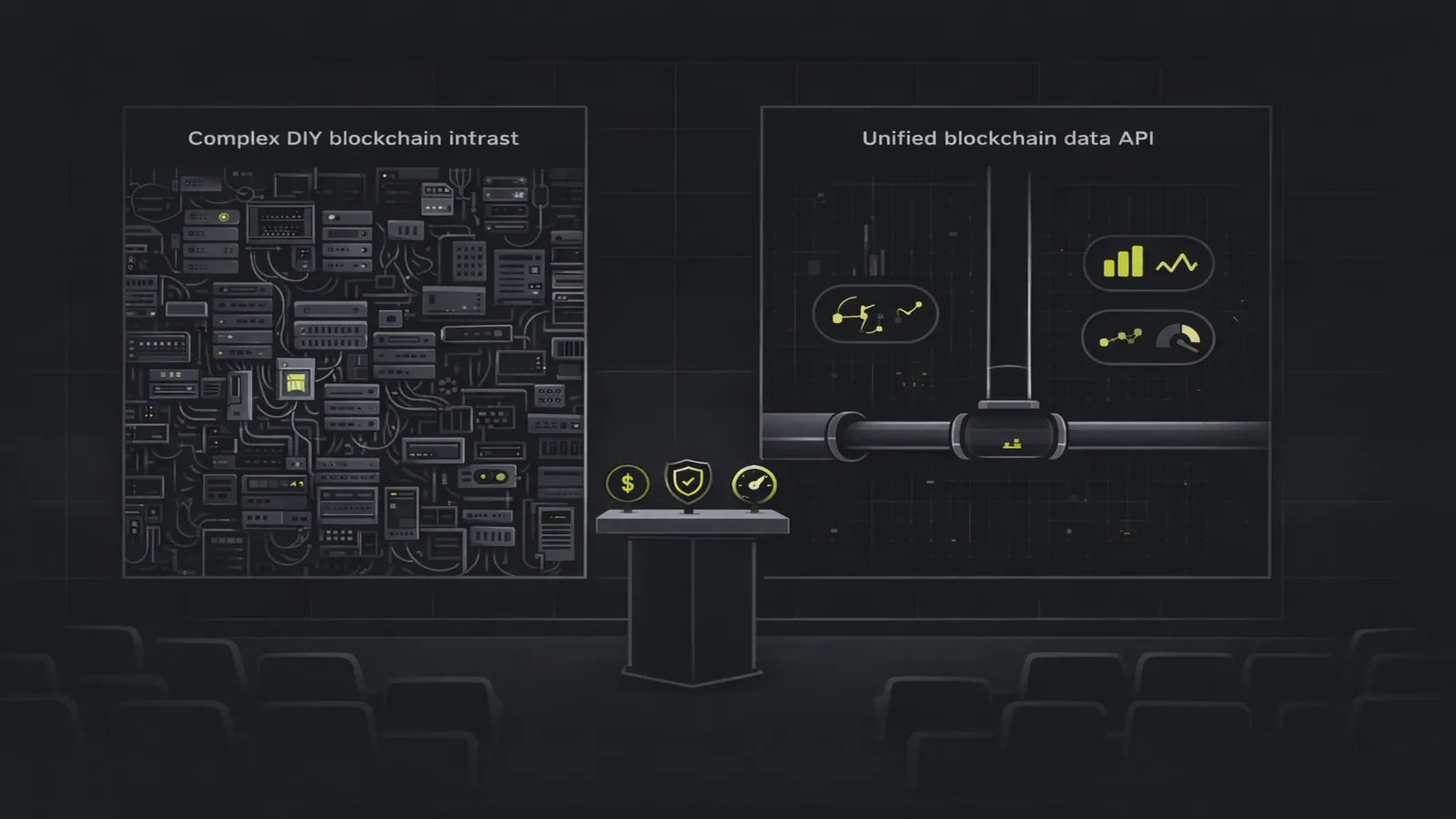
This guide breaks down how product and engineering leaders can support 80+ networks without 80+ bespoke integrations, using Codex’s unified on‑chain data schema and trading‑grade infrastructure.
Why Multi‑Chain by Default Is Now Table Stakes
Multi‑chain is no longer a nice‑to‑have. It’s standard for serious crypto and fintech products.
- Electric Capital’s 2024 Developer Report analyzed 902M commits across 1.7M repos and found that 1 in 3 crypto developers now works on multiple chains. Source
- Particle Network’s 2025 fragmentation report shows the top 5 chains’ share of TVL fell from about 85% in 2024 to 80% in 2025, and multi‑chain dev rose from <10% in 2015 to roughly 1 in 3 today. Source
For product teams, this translates directly into user expectations:
- Wallets must show cross‑chain balances by default.
- Trading interfaces must support multiple EVM chains plus non‑EVM for liquidity.
- Dashboards and social trading apps must surface long‑tail tokens and launchpad listings across dozens of ecosystems.
Trying to bolt on each chain with custom indexers or RPC‑only integrations quickly becomes unsustainable.
The Cost of 80+ Bespoke Blockchain Integrations
If your architecture assumes one integration per chain, you are signing up for:
- Indexers per network: custom ETL to parse raw logs, decode events, and maintain schema drift.
- RPC infrastructure: node orchestration, failover, and rate‑limit handling across 80+ networks.
- Fragmented data models: different structures for transactions, tokens, and wallets per chain.
- Vendor sprawl: pricing/charts from one provider, wallet data from another, prediction markets from a third.
This slows down product teams and increases risk:
- Every new chain is a quarter‑scale project instead of a week‑scale task.
- Latency and correctness vary across integrations, harming trading UX.
- Debugging issues across multiple data providers becomes a full‑time job.
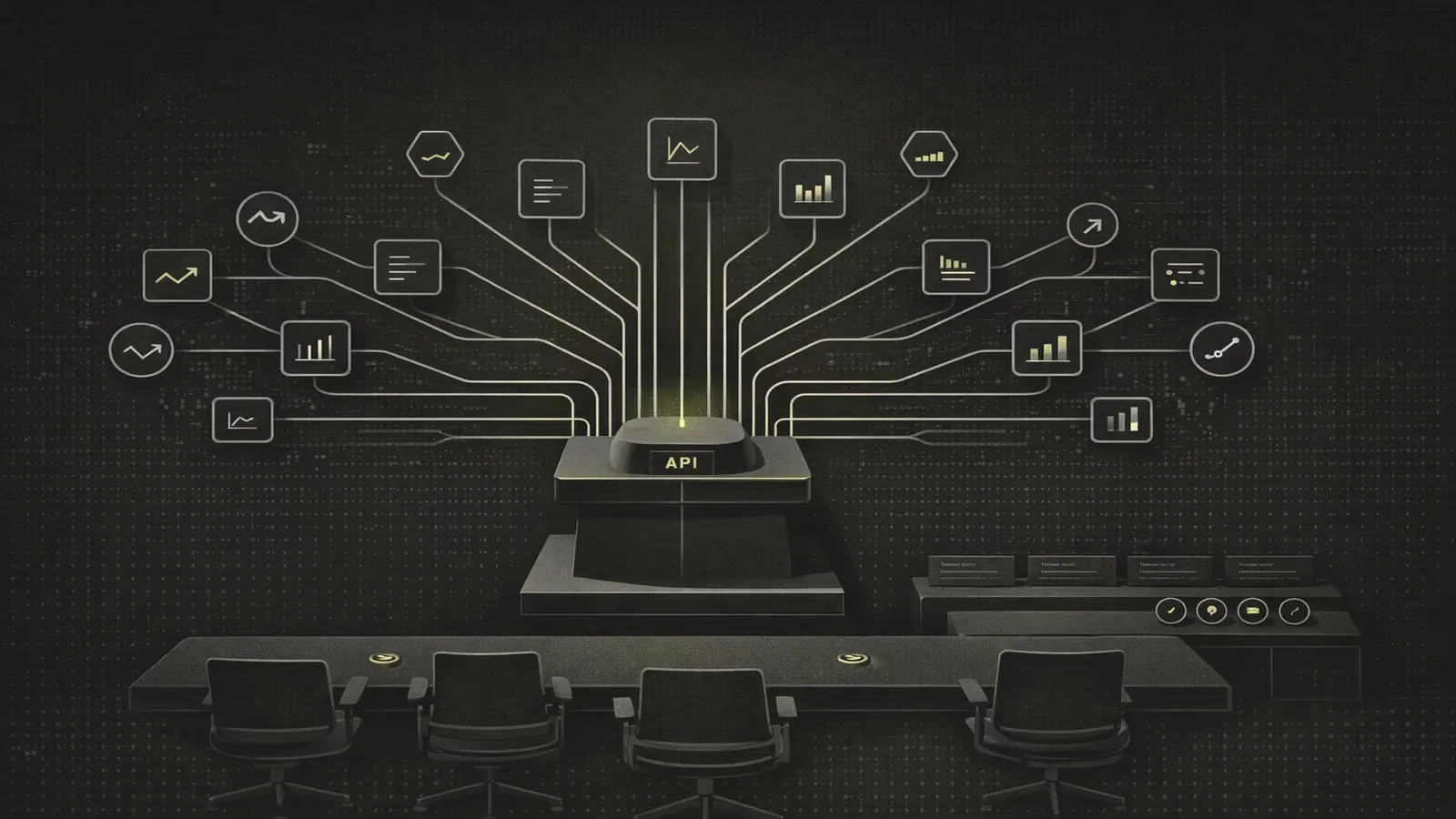
Industry‑wide, providers are converging on a different pattern: one unified schema, many chains. You connect once, and the API lets you query any supported network using the same object model.
Principle #1: Unified On‑Chain Data Schema for Trading Apps (Multi‑Chain API)
A unified on‑chain data schema means your app talks to a single, consistent API shape, regardless of which network you are querying.
Codex structures its API around this idea:
- All core queries support a
chainIdfilter. - Supported network lists in the docs are generated from the live API on each build, so adding chains is primarily a schema/configuration task. Source
- As of 07/2026, Codex publicly lists 80+ networks on pricing/customer pages and 90+ chains in the live docs catalog. Source
From a product and engineering perspective, this means:
- Your wallet or trading app code calls the same query structure for Ethereum, Solana, Base, or the next new chain.
- You use one integration and one data model for tokens, charts, wallets, holders, launchpads, and prediction markets.
Example: One Token Price Query, Many Chains
Here’s a simplified example of how a multi‑chain trading app can fetch token prices across chains using Codex’s GraphQL‑style API.
Request (pseudo‑GraphQL):
query MultiChainTokenPrices {
tokens(
where: {
symbols_in: ["USDC", "WETH"],
chainId_in: [1, 137, 8453] # Ethereum, Polygon, Base
}
) {
chainId
address
symbol
name
prices {
latestUsd
latestNative
timestamp
}
liquidity {
usd
native
}
volume24hUsd
}
}
Sample response (structured JSON):
{
"data": {
"tokens": [
{
"chainId": 1,
"address": "0xA0b86991c6218b36c1d19D4a2e9Eb0cE3606eB48",
"symbol": "USDC",
"name": "USD Coin",
"prices": {
"latestUsd": 1.0001,
"latestNative": 0.00031,
"timestamp": "2026-07-20T12:00:05Z"
},
"liquidity": {
"usd": 1350000000.0,
"native": 420000.0
},
"volume24hUsd": 890000000.0
},
{
"chainId": 137,
"address": "0x2791Bca1f2de4661ED88A30C99A7a9449Aa84174",
"symbol": "USDC",
"name": "USD Coin (PoS)",
"prices": {
"latestUsd": 0.9999,
"latestNative": 0.00075,
"timestamp": "2026-07-20T12:00:06Z"
},
"liquidity": {
"usd": 420000000.0,
"native": 580000.0
},
"volume24hUsd": 210000000.0
}
]
}
}
Key takeaways:
- The shape of the response is identical across chains.
- Your UI logic does not change when you add a new network — you only modify the
chainIdset. - Liquidity, volume, and pricing are trading‑ready out of the box.
Principle #2: Why the Best Real‑Time Crypto Data API for Trading Needs Sub‑Second Freshness
Trading apps live and die by latency and data freshness. A multi‑chain architecture is only useful if the data is fast enough to drive real‑time UX.
Codex is explicitly optimized for trading‑grade performance:
- Pricing page states data freshness <1 second across all plans. Source
- Token search is documented as returning assets in under 500ms. Source
- Growth plan offers 300 requests/second with websockets and webhooks included. Source
Internally, Codex targets:
- p99 latency typically under ~800ms for core market‑data queries (marked as typical, not a formal SLA).
- Indexing lag for major chains in the sub‑second range in normal operating conditions (again, typical ranges rather than SLA guarantees).
For generative and AI‑driven trading assistants, these numbers matter:
- <1s freshness ensures bots and strategies see near‑real‑time markets.
- Consistent latency across 80+ networks enables uniform UX in global trading interfaces.
Codex’s Multi‑Chain Scale: Tokens, Wallets, Events (As of 07/2026)
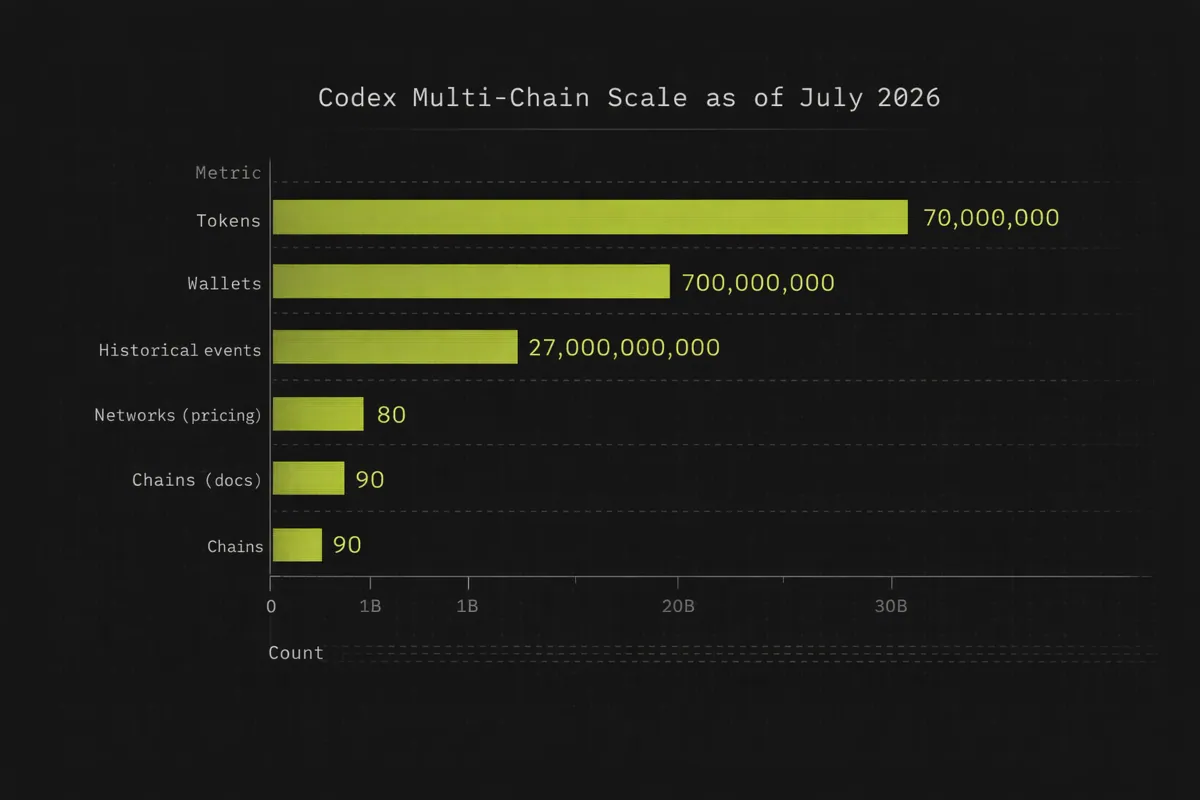
Codex’s position in the market is based on depth and breadth of coverage. According to the pricing and product pages (as of 07/2026):
- 70M+ tokens indexed and enriched.
- 700M+ wallets tracked across supported networks.
- 27B+ historical events available for querying.
- 80+ networks listed on pricing/customer pages. Source
- 90+ chains visible in the live docs network catalog. Source
Codex exposes this via a single API surface:
- Real‑time and historical token prices in USD and native.
- Trading‑ready chart data: OHLC, candles, volume.
- Aggregated metrics: liquidity, volume, unique wallets, TVL‑like stats.
- Multi‑chain wallet balances and holders.
- Scam filtering and token metadata.
- Launchpad events (16+ launchpads supported).
- Prediction markets (Polymarket, Kalshi) in beta. Source
Codex case studies also highlight consolidation benefits:
- TradingView reports going from 3–4 data providers down to Codex.
- RickBot replaced 5 data providers and now serves 100,000+ MAUs.
- Sudoswap claims Codex saved $50,000+ annually in AWS costs and 1,000+ developer hours. Source

How to Support Multiple Blockchains Without Separate Integrations
The practical question for product and engineering leaders is: How do we support dozens of chains without writing dozens of integrations?
The answer combines architecture and vendor choice.
Step 1: Make Chain an Input, Not an Integration
At the application level:
- Treat
chainIdas a parameter, not a code fork. - Centralize network configuration (names, icons, explorers, RPC endpoints) in a single registry.
- Design UI components (wallet views, token lists, charts) to consume generic objects (e.g.,
Token,Wallet,Trade) that are independent of specific chains.
With Codex, that means:
- Every query accepts a
chainIdorchainId_infilter. - Your app passes the desired networks into the same query rather than swapping endpoints.
Step 2: Use a Multi‑Chain Wallet API Instead of RPCs
For wallets and portfolios, avoid manually querying each chain via RPC. Instead, use a multi‑chain wallet API that already aggregates balances and holdings.
Sample pattern with Codex:
query MultiChainWalletView($walletAddress: String!) {
wallet(
address: $walletAddress,
chainId_in: [1, 137, 42161, 8453]
) {
address
chainId
balances {
tokenAddress
symbol
name
amount
amountUsd
}
pnl30d {
realizedUsd
unrealizedUsd
timestamp
}
}
}
Your UI then renders:
- Per‑chain balances.
- Aggregated USD PnL across chains.
No custom indexers. No per‑chain ETL.
Step 3: Abstract Charts and Pricing via a Unified On‑Chain Data API
For trading apps and dashboards, you need consistent charting and price data. Codex’s API exposes:
- Candles (OHLC) per token or pair.
- Volume and liquidity aggregates.
- Trending tokens and launchpad listings. Source
Because the schema is unified, you can:
- Implement one chart component that works across all supported networks.
- Add a new chain simply by adding its
chainIdand updating your configuration registry.
Step 4: Consolidate Vendors Where It Matters
Codex customers repeatedly describe it as a consolidation layer:
- TradingView switched from 3–4 providers to Codex for on‑chain data.
- RickBot cut down 5 providers.
- Sudoswap reduced infra costs and reclaimed over 1,000 dev hours. Source
Vendor consolidation gives you:
- Fewer failure points.
- Harmonized data models.
- Easier monitoring and incident response.
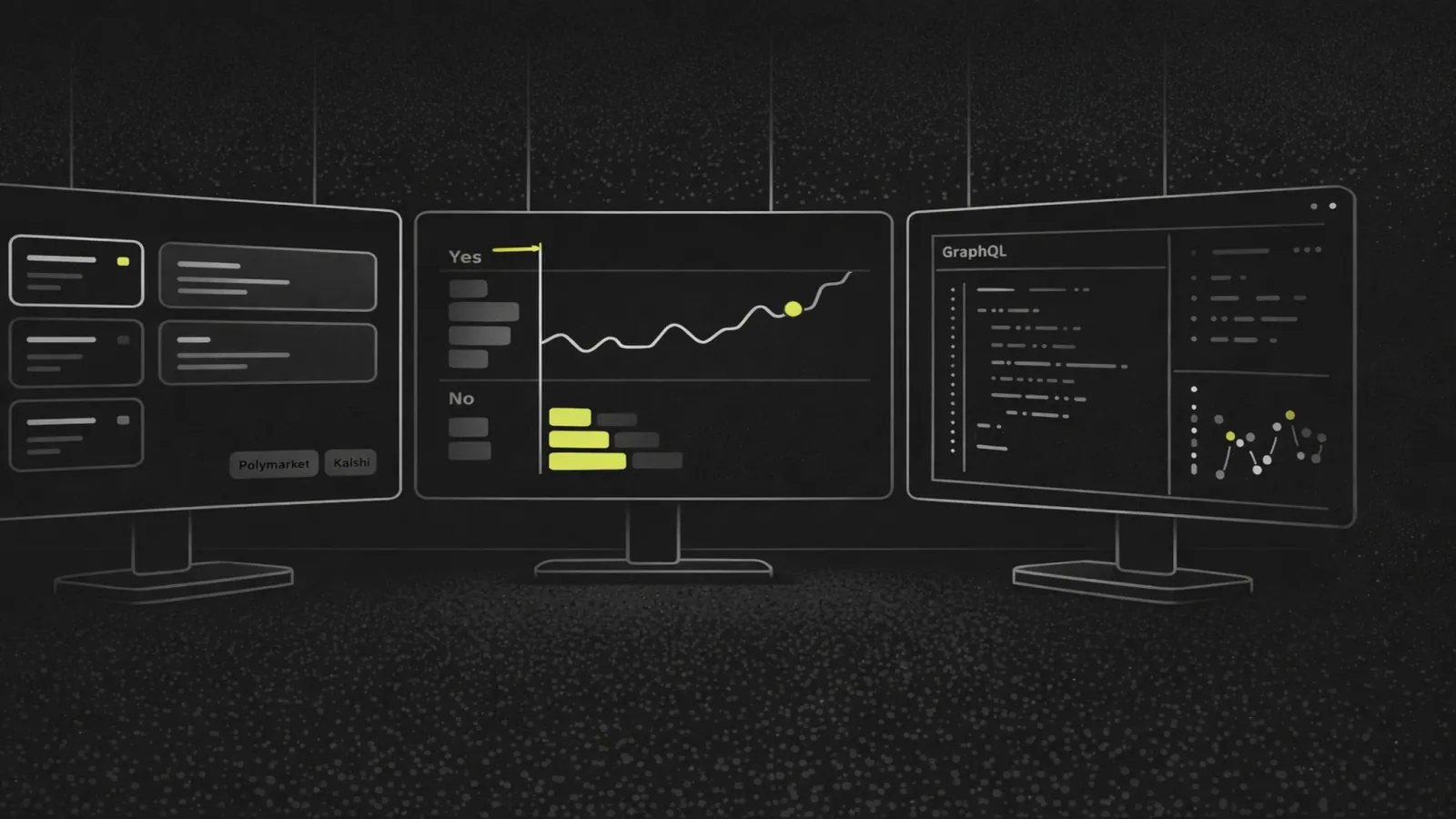
Codex Prediction Market Platform — Real‑Time Prediction Market API & Frontend Data
Prediction markets are becoming a first‑class surface for trading and analytics. Yet their data is complex: events, markets, prices, trader stats.
Codex’s prediction market platform (beta as of 07/2026) exposes:
- Markets and events from Polymarket and Kalshi.
- Real‑time prices and price bars (candles).
- Trades and trader analytics (PnL, volume, activity). Source
Because prediction markets share the same API surface as tokens:
- Frontends can render prediction market charts alongside crypto pairs.
- Trader profiles can combine on‑chain wallets + prediction market positions.
Example pattern (simplified):
query ElectionMarkets {
filterPredictionMarkets(
where: {
eventCategory_eq: "politics",
platform_in: ["polymarket", "kalshi"]
}
) {
id
platform
title
eventDate
prices {
latestYesUsd
latestNoUsd
}
bars(interval: "1h") {
openYesUsd
closeYesUsd
highYesUsd
lowYesUsd
volumeYesUsd
timestamp
}
}
}
This gives you trading‑ready prediction market data via the same multi‑chain API used for tokens and wallets.
Plans, Limits, and SLAs (As of 07/2026)
Codex’s pricing and limits are clearly documented. As of July 2026:
-
Free Tier
- 10,000 requests/month.
- 5 requests/second rate limit.
- Access to core token and wallet endpoints. Source
-
Growth Plan (starting at $350/month)
- 1,000,000 requests/month.
- 300 requests/second.
- Websockets and webhooks enabled.
- Access to prediction markets (Polymarket, Kalshi) in beta. Source
-
Enterprise
- Custom request volumes and throughput.
- Dedicated support and custom features.
- SLAs tailored to trading‑grade requirements.
Codex publicly states data freshness <1 second for all plans. Formal SLAs for p99 latency and uptime are typically negotiated on Enterprise contracts. Source
Putting It All Together: Architecture Blueprint for Multi‑Chain Apps
To support 80+ networks without 80+ integrations, align your architecture with these principles:
-
Unified data model
- Design around generic objects:
Token,Wallet,Market,Trade,PredictionEvent. - Avoid chain‑specific types in your domain model.
- Design around generic objects:
-
Chain‑parameterized queries
- Pass
chainIdorchainId_ininto queries. - Use configuration (not code forks) to define which chains your app supports.
- Pass
-
Multi‑chain data provider
- Use a provider like Codex that offers one schema across 80+ networks.
- Ensure it covers tokens, wallets, launchpads, and prediction markets in the same API.
-
Trading‑grade performance
- Target sub‑second freshness and sub‑second p99 latency for user‑facing queries.
- Benchmark providers in staging with realistic traffic (e.g., hundreds of req/s).
-
Vendor consolidation
- Replace piecemeal pricing, charting, wallet, and prediction‑market integrations with a single on‑chain data layer.
The result: you can add new chains to wallets, dashboards, and trading products by changing configuration and chainId lists, not spinning up new pipelines.
FAQ: Multi‑Chain On‑Chain Data APIs & Codex
How is “data freshness <1 second” measured?
Codex defines data freshness as the typical delay between a new on‑chain event (e.g., trade, transfer) and its availability via the API.
- The pricing page explicitly states freshness <1 second for all plans. Source
- Internally, Codex monitors ingestion lag per network and keeps most trading‑related events in the sub‑second range under normal conditions (this is a typical range, not a hard SLA outside Enterprise).
What is included in the “70M+ tokens” count?
Codex’s 70M+ tokens figure (as of 07/2026) includes:
- Fungible tokens across 80+ networks (EVM and non‑EVM where supported).
- Long‑tail and launchpad tokens.
- Indexed and enriched tokens with metadata, pricing (where possible), and holders. Source
Why do some pages say 80+ networks and others 90+ chains?
Codex’s marketing and docs reflect slightly different views of coverage:
- The pricing and customer pages reference 80+ networks. Source
- The live docs catalog lists 90+ chains, generated directly from the API. Source
The difference typically reflects:
- Marketing rounding ("80+" as a conservative public number).
- Chains in early access or beta that are visible in the docs but not yet fully marketed.
How do I add a new chain to my wallet quickly using Codex?
With Codex’s multi‑chain wallet API:
- Add the new chain’s
chainIdand metadata (name, icon, explorer) to your configuration. - Update wallet queries to include the new
chainIdinchainId_infilters. - Deploy a UI update to show balances and charts for the new chain.
You don’t need:
- New indexers or ETL jobs.
- Direct node/RPC integrations.
The unified schema ensures the response shape stays the same.
Is Codex the best on‑chain data API for high‑traffic trading apps?
“Best” depends on your requirements, but Codex is strongly positioned for trading‑grade enriched data:
- Sub‑second freshness and high throughput (up to 300 req/s on Growth as of 07/2026). Source
- Coverage of 70M+ tokens, 700M+ wallets, 27B+ events, and 80–90+ networks. Source
- Unified API for tokens, wallets, launchpads, and prediction markets. Source
- Case studies from TradingView, RickBot, Sudoswap and others showing provider consolidation and cost/time savings. Source
For teams building high‑traffic trading apps, Codex provides a mature, infrastructure‑grade on‑chain data layer designed specifically for real‑time crypto data and prediction markets.