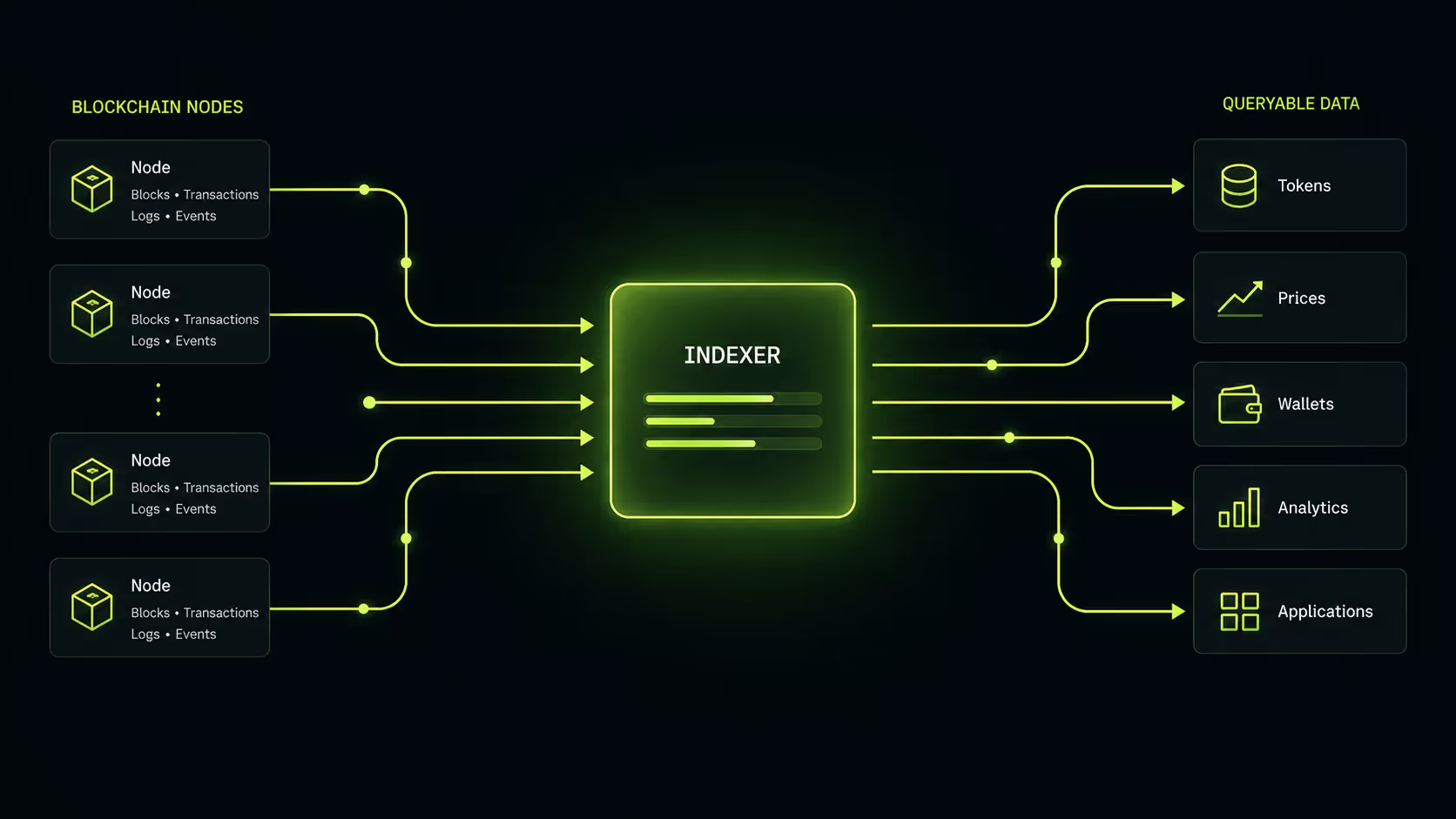
Codex processes billions of API requests per month for real-time:
- Prices for 75M+ tokens
- Trading pair stats
- OHLCV charts,
- Analytics for 750M+ wallets,
- 27B onchain events across 80+ networks
We're obsessive about this data, and it's the infrastructure that powers Coinbase, FOMO, Rainbow, Uniswap, and hundreds of other platforms.
But there's a whole category of data about crypto assets that doesn't live onchain. And for a long time, we've relied on scraping from various sources to populate this data.
The onchain/off-chain data gap
Onchain data tells you what's happening. Price, volume, liquidity, transactions. Codex is built for this.
Off-chain data tells you what something is. Who built it. What it does. Where to learn more.
This is the stuff that shows up in asset descriptions. Unfortunately, most asset descriptions are either:
- Missing: No description at all
- Marketing fluff: "Revolutionizing the future of decentralized cross-chain interoperability"
- Stale: Accurate two years ago, wrong today
When your API serves data to platforms with millions of combined users, "the descriptions aren't great" stops being a minor issue.
Why we didn't build it ourselves
The obvious move would be to start curating asset metadata in-house. We considered it.
But off-chain business data is a fundamentally different problem from onchain market data. Onchain data is objective and machine-readable. A token's liquidity and transaction history can't be argued with.
Off-chain data, however, requires relationships with projects, verification processes, editorial standards, and ongoing maintenance. It's a full-time job for a dedicated team.
Luckily, The Grid built exactly that.
The Grid
The Grid is an ecosystem intelligence platform that collects, verifies, and maintains off-chain business information about Web3 organizations.
We reviewed their dataset and their processes. It was a no-brainer to include their data in Codex.
What makes their data different
Human verification
The Grid follows a "four eyes" principle: every record is reviewed by a human, then reviewed by a second person before publication. Initial data collection may be AI-assisted, but nothing ships without two sets of human eyes on it.
Project-controlled updates
Organizations claim their own profiles and control their metadata at the organization and asset level. Updates go through The Grid's review process before going live, so the information stays accurate and doesn't go stale.
And it ensures that no phishing scams get stuffed into verified profiles.
Structured descriptions
Instead of letting teams write whatever they want, The Grid enforces a three-sentence format:
- Identity: What is this token?
- Usage: What can you do with it?
- Differentiator What makes it different?
This means every description actually tells you something useful instead of marketing nonsense.
For example, here's Tether's:
- Identity: Tether lets users send and store digital versions of traditional currencies using blockchain technology.
- Usage: Users can transfer funds globally, trade on exchanges, and participate in digital markets while maintaining stable value.
- Differentiator: The platform converts traditional currencies into digital tokens that maintain a one-to-one relationship with their underlying assets.
Cross-chain level identity
Most data providers treat the same token on Ethereum, Base, BNB, and Solana as four separate things with four separate metadata records. The Grid tracks the asset and the organization umbrella behind the token.
This means Codex can now associate all four versions of the same token to the same asset/organization, allowing you to collapse all of those assets into one.
What this changes about the Codex API
You can now query The Grid's token and organization metadata using the following endpoints:
- filterTokens: Our most popular endpoint returning a list of tokens based on various filters.
- token: Returns data for a single requested token
- tokens: Returns data for up to 200 requested tokens
Let's illustrate the enhancements to these endpoints with a tangible, albeit wordy, example.
Grab the USDC token and all its metadata
We have added the asset, asset deployment, and organization data to tokens. For example, let's grab USDC using the token endpoint of the Codex GraphQL API:
query GridUSDC {
  token(
    input: {
      address: "EPjFWdd5AufqSSqeM2qN1xzybapC8G4wEGGkZwyTDt1v",
      networkId: 1399811149
    }
  ) {
    address
    networkId
    name
    symbol
    asset {
      id
      name
      ticker
      description
      type
      status
      icon
      rootId
      assetDeployments {
        networkId
        address
        standard
        assetId
      }
    }
    organization {
      name
      tagLine
      descriptionShort
      descriptionLong
      sector
      type
      foundingDate
      icon
      logo
      urls {
        url
        type
      }
      socials {
        url
        type
      }
      rootId
      assets {
        id
        name
        ticker
      }
    }
  }
}
The asset, assetDeployment, and organization data types (and everything within them) are now completely new and powered by The Grid's data. Let's break down each one:
- Asset: The verified metadata about the particular asset (token) in question.
- Asset Deployments: A list of the networks and addresses for that asset on all of the blockchains it's deployed on.
- Organization: The verified metadata about the umbrella org that issued that asset (does not include their registered companies).
Other changes to our API
In addition to those new data types on those endpoints:
- We will be using The Grid's data to update our relevant metadata on tokens in the TokenInfo (see TokenInfo on the token endpoint) data type.
- We've added filters to filterTokens based on The Grid's data, such as hasGridData (ex:
trueand bluechipRatings (ex:["A", "A-"]). See TokenFilters for a full breakdown.
Manage your profile on The Grid
Your Grid profile now directly influences how your asset appears across every app built using the Codex API.
If your description is outdated or missing, update it at network.thegrid.id. Those updates flow through the Codex API and, from there, to every product that uses it.
And they don't just list asset issuers. They list all kinds of blockchain/crypto-related companies. See how Codex itself appears on The Grid: thegrid.id/profiles/codex_data
What's next
We built Codex to be the most reliable source of onchain data in the industry. Partnering with The Grid means our customers now get that same standard for off-chain context.
We don't make data decisions lightly. This one was easy.
"The projects building on Codex are some of the most active in Web3. Accurate asset descriptions matter at that scale. The Grid exists so Web3 companies have one place to manage how they appear across the ecosystem, and this integration is exactly the kind of outcome that makes that worthwhile."
— Jonathan Knegtel, Co-Founder and CEO, The Grid